York
08:00 AM - 05:00 PM
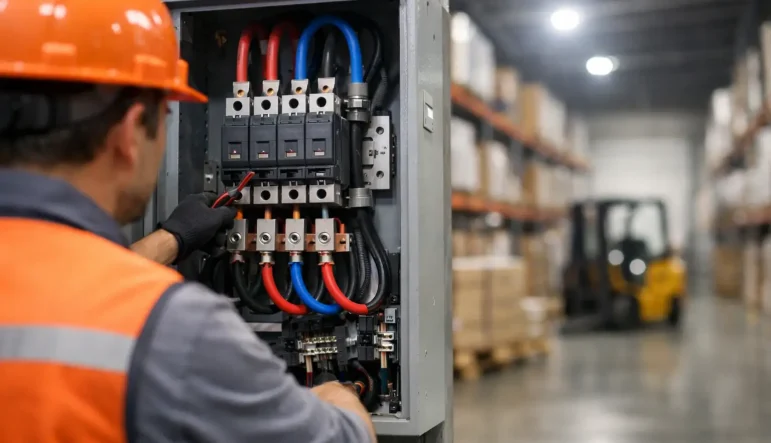
When a warehouse starts adding higher-load equipment, extra pick faces or electric vehicle charging, the electrical system usually reaches its limit before the building does. That is why three phase installation for warehouses is not simply a technical upgrade. It is often the point where a site becomes safer, more efficient and better prepared for day-to-day operational demand.
Warehouses place a particular kind of pressure on an electrical installation. Loads are spread across lighting, heating, ventilation, shutter doors, conveyor systems, battery charging, office areas and sometimes cold storage or workshop equipment. In a smaller unit, a single-phase supply may be enough for basic use. In an active warehouse with machinery and regular peaks in demand, three-phase power is often the more suitable foundation.
Three-phase systems are designed to carry larger and more consistent electrical loads. For warehouse environments, that matters because demand rarely comes from one source. It comes from many systems running together, often at start-up and often across long operating hours.
A properly designed three-phase installation can support motors more effectively, reduce the risk of overloading individual circuits and improve distribution across the building. That does not mean every warehouse needs the same specification. A straightforward storage unit with LED lighting and a few sockets will have a very different profile from a distribution centre with mechanical handling equipment and charging infrastructure.
The practical point is simple. If the building relies on equipment that draws significant power, or if the operation is expected to scale, the incoming supply and internal distribution need to match that reality.
A warehouse installation is more than adding a different supply type. The design usually begins with the incoming service capacity, then moves through distribution equipment, protective devices, cable routes and final circuits.
In most cases, a three phase installation for warehouses will involve assessment of the distribution board or panel arrangement, load balancing across phases, protective coordination and clear separation of critical and non-critical circuits. If machinery is involved, there may also be isolators, local control points and dedicated sub-main supplies to specific plant areas.
Lighting is often part of the wider picture rather than a separate concern. High-bay fittings, emergency lighting and external yard lighting all add to the load profile. The same applies to offices within the warehouse footprint, welfare areas and security systems. When these are planned in isolation, installations become fragmented. When they are planned together, the site is easier to operate and easier to maintain.
A warehouse can look electrically straightforward and still present complications once the survey starts. Existing cable routes may be unsuitable, earthing arrangements may need review, and original boards may have no sensible spare capacity. It is also common to find that a unit has changed use several times, leaving behind undocumented alterations.
That is why the early survey stage is not just an administrative step. It establishes actual demand, identifies compliance issues and tests whether the building can support the intended installation without introducing avoidable risk.
For occupied sites, the survey should also consider operational constraints. Some clients can allow shutdowns out of hours. Others run extended shifts and need staged work to avoid disruption. In warehouse settings, programme planning is often as important as technical design.
The most common mistake in warehouse electrical work is planning only for the current load. A site may be fitting one new roller shutter today, but next year it may add charging points, packing lines or mezzanine services. If the design leaves no headroom, the building returns to the same limitation that prompted the upgrade.
Load assessment should look at connected load, likely maximum demand and how equipment behaves in practice. Some loads are constant, while others spike at start-up. Forklift charging, HVAC systems and machinery can create demand patterns that are not obvious from a simple equipment list.
There is also a balance to strike. Overspecifying an installation can increase cost without practical benefit. Underspecifying it can lead to nuisance tripping, overheating, poor performance and expensive remedial works. The right approach is based on measured need, realistic growth and compliance with the relevant standards.
Warehouse clients are usually managing more than electrical performance. They are managing liability, insurance requirements, workplace safety and business continuity. That is why compliance needs to be treated as part of the installation itself, not as paperwork added at the end.
A compliant three-phase installation should align with current wiring requirements, suitable inspection and testing procedures and the operational needs of the site. In practical terms, that includes appropriate protection against fault current, correct circuit identification, suitable isolation arrangements and clear documentation for future maintenance.
In regulated or higher-risk settings, clients may also need confidence that contractors are approved, competent and able to work within formal site controls. That is especially relevant where warehouses support transport, logistics or infrastructure operations with little tolerance for downtime.
Warehouse work is rarely carried out in an empty shell. Stock, racking, staff movement and vehicle routes all affect how installation can be delivered. Access equipment may need careful scheduling. Cable runs may have to avoid active loading areas. Dust, temperature variation and impact risk may influence containment and equipment selection.
This is where experience makes a measurable difference. A technically correct design can still become a poor installation if it ignores how the building actually operates. Protective equipment must be accessible. Isolators need to be located where maintenance teams can use them safely. Distribution routes should support inspection and future additions rather than create hidden weaknesses.
It also matters how shutdowns are handled. Switching over to a new board or supply arrangement may require planned isolation, temporary power arrangements or phased commissioning. Warehouses with refrigeration, security systems or timed dispatch operations cannot treat electrical downtime casually.
Clients often ask whether they should install more capacity now than they currently need. The honest answer is that it depends on the site, the lease term, the business plan and the likely pace of operational change.
If a warehouse is expected to add automation, more charging infrastructure or heavier plant, allowing for spare ways, suitable sub-main routes and board capacity can be sensible. If the unit is on a short-term arrangement with limited planned change, a more focused installation may be the better commercial decision.
Future-proofing works best when it is practical rather than speculative. Leave room for realistic expansion, not every possible scenario. That keeps capital spend under control while avoiding the false economy of an installation that is immediately restrictive.
For warehouse operators, procurement teams and facilities managers, the right questions go beyond price. Ask how the load has been assessed, what assumptions have been made about future demand and how disruption will be managed during the works.
It is also worth asking who will carry out the survey, who will certify the installation and how documentation will be handed over. On complex sites, clear communication matters as much as technical competence. Delays often come from unclear scopes, missed operational constraints or late design changes rather than the installation work itself.
An approved contractor should be able to explain the trade-offs plainly. For example, a full board replacement may cost more upfront but reduce long-term risk. A partial upgrade may be acceptable in some settings, but only if the existing infrastructure is genuinely suitable.
The best electrical installations are not the ones that attract attention. They are the ones that allow a warehouse to run as intended, with the right capacity, safe distribution and enough resilience to deal with everyday demand.
For businesses planning growth, changing equipment or addressing recurring electrical limitations, three-phase power is often a practical next step. The value comes from getting the design, survey and installation right from the start. That is where an experienced contractor brings real benefit – not by making the job sound complicated, but by making sure the building can do its work properly long after the installation team has left.
Where warehouse power is concerned, the useful question is not whether an upgrade looks substantial on paper. It is whether the installation will still make operational sense two or three years from now.

Considering plug-in solar for homes? Understand UK safety, DNO notific

Citroën has unveiled ë-Berlingo, the latest version of its multi-awa
