York
08:00 AM - 05:00 PM
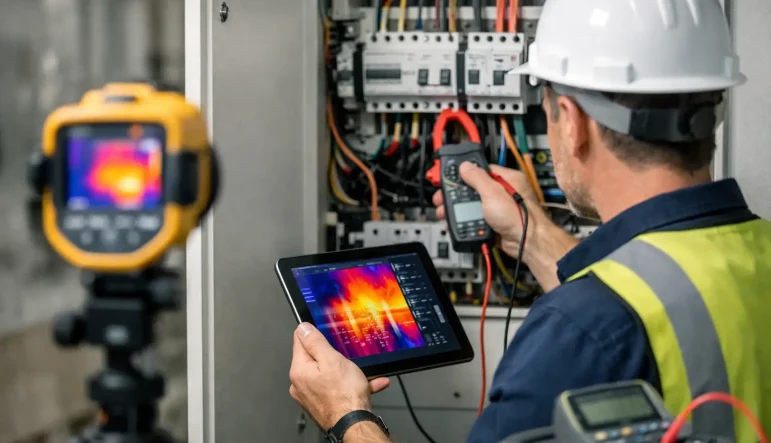
If you are asking what does an electrical survey include, the honest answer is that it depends on the property, the system, and the reason for the survey. A landlord preparing for compliance, a facilities manager planning upgrades, and a homeowner buying an older property will not all need the same level of inspection. What stays consistent is the purpose – to establish condition, identify risk, and give you a clear basis for action.
A proper electrical survey is not just a quick look at a consumer unit or a glance at a few sockets. It is a structured assessment of the installation and associated components, carried out to understand safety, suitability, performance, and in many cases compliance with current regulations. In practical terms, it should leave you with more than a list of faults. It should tell you what is present, what is serviceable, what needs attention, and how urgent that work is.
At a practical level, an electrical survey usually begins with the basics of the electrical installation itself. That means the incoming supply arrangement, the main switchgear or consumer unit, protective devices, earthing and bonding, visible wiring systems, and the fixed electrical accessories throughout the building. In a domestic property, this may focus on circuits for lighting, sockets, cooking equipment and any outdoor supplies. In a commercial or industrial environment, it may extend to distribution boards, sub-mains, plant connections, emergency systems, three-phase equipment and specialist installations.
The surveyor will typically assess the general condition of the installation and look for signs of wear, damage, age-related deterioration, poor workmanship, overloading, inappropriate alterations and non-compliant additions. That could include anything from cracked accessories and exposed conductors to poorly labelled boards or missing circuit protection. In older buildings, the survey may also highlight legacy systems that were acceptable when installed but no longer meet expected standards for continued safe use.
Documentation matters as well. A thorough survey often includes checking whether previous certification, test records, circuit schedules and maintenance documents are available and consistent with what is physically on site. Missing or inaccurate paperwork is common, especially where premises have changed hands or undergone piecemeal alterations over time. That does not automatically mean the installation is unsafe, but it does make risk assessment and future works more difficult.
One area that causes confusion is the difference between a visual electrical survey and a more detailed inspection with testing. A visual survey relies on what can be accessed and observed without significant dismantling or intrusive work. It can identify obvious defects, unsuitable equipment, signs of overheating, poor enclosure integrity, or visible departures from good practice.
Testing goes further. It uses instruments to confirm whether circuits and protective measures perform as they should. Depending on the scope, this can include continuity, insulation resistance, polarity, earth fault loop impedance, RCD performance and other verification checks. Where a client needs a formal assessment of installation condition, this is often tied to an Electrical Installation Condition Report, though not every survey is commissioned for that specific outcome.
This distinction matters because a visual survey is useful for early-stage planning, purchase decisions or broad condition assessment, but it cannot provide the same level of certainty as an inspection and test. If there are concerns about safety, hidden defects or regulatory compliance, a visual-only approach may not be enough.
A competent electrical survey normally considers several connected areas rather than treating the installation as one single item. The supply characteristics are checked first, because the installation has to be suitable for the way electricity is actually delivered to the building. Earthing arrangements and main protective bonding are then assessed, as faults in these areas can have serious safety implications.
The distribution equipment is another central part of the survey. That includes consumer units, distribution boards, circuit breakers, RCDs and isolators. The survey should look at whether equipment is correctly rated, appropriately labelled, accessible for operation and maintenance, and free from visible damage or unsafe modifications.
Circuits and accessories are also reviewed. This covers fixed wiring, socket outlets, switches, lighting points, fused connection units and supplies to fixed equipment. In commercial and industrial settings, the scope may extend to plant rooms, machinery isolators, containment systems and local control panels. Where emergency lighting, fire alarm interfaces or external electrical systems are present, these may be included or assessed as separate but related elements depending on the brief.
A good survey also considers the environment. Electrical systems in a dry office, a tenanted flat, a food production area and a transport facility face very different demands. Moisture, dust, vibration, heat, public access and mechanical impact all influence whether an installation remains suitable. The same equipment that performs adequately in one setting may be inappropriate in another.
In a home, the survey often centres on occupant safety and the general condition of the fixed installation. That means checking whether the board is modern and properly protected, whether circuits appear correctly arranged, whether accessories are in sound condition, and whether there are obvious signs of outdated wiring or unauthorised alterations. Buyers of older houses and landlords managing rented properties often use surveys to understand whether remedial work is likely before committing to costs.
In commercial premises, the picture is broader. Offices, retail units, warehouses and mixed-use sites usually require attention not just to safety, but also to business continuity. A survey may consider load capacity for future fit-outs, adequacy of distribution to tenant areas, the condition of plant supplies, emergency systems, and whether previous changes have been documented properly. For facilities teams, the value of the survey is often in reducing operational uncertainty before maintenance, refurbishment or compliance works begin.
In industrial settings, electrical surveys tend to be more demanding because of higher loads, more complex distribution, and harsher environments. There may be three-phase systems, motor control equipment, specialist plant, and higher consequences if faults are missed. The survey must account for operational conditions, isolation requirements, access constraints and the interaction between electrical safety and production reliability.
Infrastructure and transport environments add another level again. Access rules, stakeholder requirements, critical service continuity and sector-specific standards can all shape the scope. In those situations, a survey is not simply about identifying defects. It is about making sure the installation can be understood, managed and developed without compromising compliance or operational control.
A useful survey result should be clear enough for both technical and non-technical decision-makers to act on. That generally means a written report setting out what was inspected, what was found, where the limitations were, and what actions are recommended. The stronger reports do not just note defects. They distinguish between immediate safety concerns, compliance issues, deterioration, and improvements that may be advisable but not urgent.
Where testing forms part of the scope, you should also expect recorded results and observations linked to the relevant circuits or equipment. If access restrictions prevented full inspection, that should be stated plainly. Any report that leaves out limitations can be misleading, because even a competent survey can only assess what was reasonably accessible and within its agreed remit.
Clients often assume the report will simply say pass or fail. In reality, the outcome is usually more nuanced. Some issues may need prompt remedial work, while others can be planned into future maintenance or upgrade programmes. That is why context matters. The same observation may carry different weight in an occupied family home than in a high-load commercial environment.
One of the most common problems with electrical surveys is not poor inspection, but poor scoping. If the client asks for a survey without defining the objective, the result may not answer the real question. Are you checking safety before a tenancy? Assessing capacity for new equipment? Investigating faults? Reviewing an ageing installation before refurbishment? Each of those needs a slightly different approach.
This is where an experienced contractor adds value. A properly scoped survey is more efficient, more relevant and more defensible. SJB Smart Electricals works across domestic, commercial, industrial and transport-related environments, so the survey process can be aligned to the type of site, the operational pressures involved and the standard of evidence required.
You do not need to wait for visible faults before arranging a survey. It is often sensible before purchasing a property, taking on a lease, starting a refurbishment, installing higher-demand equipment, or bringing an older site back into regular use. Surveys are also useful when documentation is poor, when previous works are uncertain, or when maintenance teams need a clearer picture of asset condition.
Just as importantly, an electrical survey helps avoid guesswork. It gives homeowners, landlords, business operators and procurement leads a more reliable basis for budgeting and decision-making. That can mean fewer surprises during installation work, fewer compliance issues later on, and a better understanding of where risk actually sits.
The right survey does not just tell you what is wrong. It tells you what you are dealing with, what needs attention first, and what can be planned properly rather than left to chance.

Understand the benefits of battery storage at home or office, from res

Citroën has unveiled ë-Berlingo, the latest version of its multi-awa
