York
08:00 AM - 05:00 PM

A battery is not simply a larger version of a power bank. When properly specified and installed, it becomes part of a property’s electrical infrastructure, storing energy for use when it is most valuable. The benefits of battery storage at home or office can include greater resilience, improved use of solar generation and better control over electricity costs, but the result depends on the building, its demand profile and the quality of the design.
For homeowners, the question is often whether stored solar energy can reduce evening grid use and provide useful backup during an outage. For offices and other commercial premises, the focus may be on reducing peak demand, supporting critical loads or making better use of a tariff with cheaper overnight periods. In both cases, the battery must be planned around the electrical installation rather than added as an afterthought.
The most immediate benefit is the ability to use electricity at a different time from when it was generated or purchased. A solar PV system commonly produces most of its output in the middle of the day, when many households are lightly occupied and some offices have relatively stable demand. Without storage, surplus generation may be exported to the grid. With a battery, a proportion can be retained for later use.
This can improve self-consumption of solar energy. At home, stored power may cover part of the evening period when cooking, lighting and appliance use rise. In an office, it can contribute during early starts, late finishes or periods of higher demand. It does not remove the need for a grid connection in most installations, but it can reduce reliance on imported electricity at selected times.
Battery storage can also make time-of-use tariffs more practical. Where a tariff offers lower rates overnight, a battery may charge during the cheaper period and discharge when electricity costs more. The financial case needs careful checking: tariff structures can change, battery charging and discharging incur losses, and repeated cycling contributes to battery wear. A system should be assessed against real consumption data, not assumed savings.
A well-designed battery system can keep selected circuits operating during a power cut. This may include lighting, broadband equipment, refrigeration, security systems or essential sockets. For a home office, maintaining connectivity and basic power can prevent a short interruption from becoming a lost working day. For commercial sites, it may support communications, access control or other agreed critical functions.
Backup capability is not automatic. Many batteries switch off with the grid unless they are specified with an islanding or backup function. Even where backup is available, it may only serve a dedicated essential-load consumer unit rather than the whole property. High-load equipment such as electric showers, immersion heaters, cookers, large air-conditioning plant and rapid EV chargers can quickly exceed the battery inverter’s output.
The distinction matters. A battery with 10 kWh of usable capacity may sound substantial, but capacity describes how much energy is stored, while inverter power determines how much can be supplied at one time. A system capable of delivering 3.6 kW will not reliably run several large appliances together, regardless of its stored energy.
For offices, workshops and managed properties, battery storage can be used to limit short periods of high import. This is often called peak shaving. If a site’s demand rises sharply when heating, catering equipment, machinery or vehicle charging operates at the same time, the battery can be configured to discharge during that interval.
This approach can be valuable where electricity charges are influenced by maximum demand or where the site is close to the capacity of its existing supply. It is not a substitute for proper load assessment. If high demand is continuous, rather than brief, a battery may deplete quickly and deliver limited value. In those circumstances, changes to operating schedules, load management, supply upgrades or energy-efficiency measures may be more appropriate.
For facilities teams, the wider benefit is visibility. Battery monitoring typically shows generation, import, export, consumption and stored energy. That information can expose inefficient operating patterns and support more informed decisions about future solar PV, EV charging or electrical capacity work.
The best battery installation begins with a survey. The survey should consider the existing consumer unit or distribution board, main fuse rating, earthing arrangement, available installation space, cable routes, metering and any existing solar inverter. It should also establish whether the property has single-phase or three-phase supply and whether the planned equipment is compatible with it.
Energy data is equally important. A year of half-hourly data is particularly useful for commercial sites because it reveals daily and seasonal load patterns. For homes, smart meter data and a realistic discussion of occupancy, heating, cooking, EV charging and future plans can provide a sound starting point. A household expecting to add a heat pump or electric vehicle may need a different design from one seeking to store surplus from an existing modest PV array.
Sizing should be based on a clear objective. A smaller battery may be sufficient where the aim is to shift solar energy into the evening. A larger system may be justified where backup duration, tariff optimisation or peak management is the priority. Oversizing can lengthen payback and leave capacity unused for much of the year. Undersizing can cause the battery to fill or empty too early, limiting the benefit it was intended to provide.
Lithium battery systems require suitable locations and installation standards. The selected area should account for manufacturer clearances, ventilation requirements, temperature range, access for maintenance and protection from accidental damage. Garages, utility spaces and dedicated plant areas are common choices, but each property must be considered individually.
The installation should include appropriate electrical protection, isolation and labelling. Fire safety should be considered at the design stage, particularly in multi-occupancy buildings, commercial premises and sites with public access. A battery should not be positioned simply where there is spare wall space if the location compromises escape routes, access or the building’s wider fire strategy.
Equipment selection also matters. The battery, inverter, control equipment and any solar PV system must operate together within the manufacturer’s stated limits. Approved products, competent installation and correct commissioning are essential for safe operation, warranty compliance and dependable performance.
Battery storage connected to the electricity network is subject to technical requirements. Depending on the inverter rating and connection arrangement, the work may require notification or prior approval from the local Distribution Network Operator. Export limitation may also be needed where the network cannot accept the proposed export capacity.
For domestic work, compliance with relevant Building Regulations requirements and electrical installation standards is fundamental. Commercial and industrial projects may involve additional considerations, including site rules, fire risk assessments, landlord approvals, planned maintenance procedures and coordination with existing standby power systems.
This is why battery projects should be treated as electrical design work, not merely an equipment purchase. The installation needs proper circuit identification, testing, commissioning records and clear handover information. Users should understand what happens in normal operation, what is available during a grid outage and which loads should not be connected to backup supplies.
Battery storage is not the right first investment for every property. A building with poor insulation, outdated lighting or heavily inefficient equipment may achieve stronger and more certain savings by reducing energy demand first. Equally, a property with low daytime solar surplus and modest evening use may see limited benefit from a large battery.
At an office, the business case can be weaker if demand falls away at the same time that solar generation is available, or if the building is unoccupied overnight and has no favourable tariff opportunity. At home, a battery may be less compelling for occupants who are usually present during daylight hours and already use much of their solar generation directly.
The value becomes clearer when the system has a defined role: retain surplus solar power, support critical circuits, reduce short demand peaks, charge on a lower tariff or prepare a property for electrified heating and transport. More than one of these may apply, but each should be quantified before equipment is selected.
A properly surveyed battery installation should leave the owner with more than a new piece of technology. It should provide a clear operating plan for the property’s energy use, with capacity, backup expectations and safety arrangements that match how the building is actually used. For homeowners, businesses and facilities teams, that informed approach is where battery storage delivers its most dependable value.
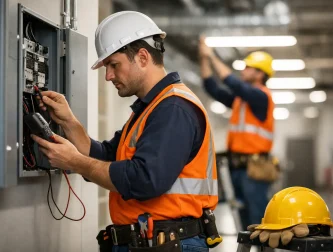
Commercial electrician services for compliant, efficient premises, fro

Citroën has unveiled ë-Berlingo, the latest version of its multi-awa
