York
08:00 AM - 05:00 PM

A failed inspection rarely starts with one dramatic fault. More often, it comes down to small issues that have been ignored for too long – outdated consumer units, poor documentation, untested circuits or work carried out without proper verification. That is why electrical compliance requirements matter. They are not paperwork for its own sake. They are the framework that keeps people safe, reduces disruption and shows that an installation has been designed, installed and maintained properly.
For property owners, facilities teams and infrastructure operators, compliance is not one single task. It sits across design, installation, inspection, maintenance and staff competence. What applies in a family home will differ from what is expected in a factory, office block or transport environment, but the principle is the same: electrical systems must be safe for their intended use, and there must be evidence to support that position.
When people talk about compliance, they often mean different things. Some mean whether an installation meets current wiring standards. Others mean whether legal duties have been met. In practice, electrical compliance requirements usually cover three connected areas: the condition of the installation itself, the way work has been carried out, and the records that prove both.
In the UK, this often means working in line with BS 7671, alongside relevant health and safety law, Building Regulations and sector-specific rules where applicable. BS 7671 is not, by itself, an Act of Parliament, but it is widely treated as the recognised technical standard for electrical installations. If work falls short of that benchmark, it becomes much harder to demonstrate that a system is safe.
That distinction matters. A site can appear to be functioning normally and still be non-compliant. Electrical systems do not always fail in obvious ways. A board may look serviceable while containing poor labelling, inadequate fault protection or signs of thermal stress. A commercial unit may have had extensions and alterations over time, with no clear records showing how circuits were modified. Compliance is about being able to verify safety, not simply assuming it.
Electrical compliance requirements are not identical across every property type because the risks are not identical either. A domestic installation usually centres on occupant safety, fire risk and suitability for modern demand. In commercial premises, the focus broadens to include employee safety, public access, emergency systems and business continuity. In industrial and transport settings, compliance becomes more demanding again because downtime, heavy loads, hazardous environments and operational interdependencies raise the consequences of failure.
This is why a one-size-fits-all approach rarely works. An inspection regime that may be adequate for a standard office could be too light for a manufacturing site with harsh environmental conditions. Equally, applying industrial assumptions to a small domestic property can create unnecessary cost without clear benefit. The right approach depends on use, occupancy, equipment, environment and the age of the installation.
For clients managing mixed estates, that can become complicated quickly. Different buildings may have been upgraded at different times, under different standards and by different contractors. The challenge is not only correcting defects. It is establishing a clear and defensible compliance position across the estate as a whole.
Most compliance duties can be traced back to a straightforward obligation: electrical systems must be constructed and maintained so as to prevent danger, so far as is reasonably practicable. That broad duty then translates into practical expectations.
Installations should be designed for the actual load and environment, not guessed from past arrangements. Protective devices must be appropriate for the circuits they serve. Earthing and bonding need to be present and effective. Equipment must be suitable for the location, especially where there is moisture, dust, vibration, heat or public access.
Inspection and testing are also central. New work should not be treated as compliant simply because it is complete. It needs verification. Existing installations need periodic inspection because wear, damage, unauthorised alterations and changing use can all create risk over time. A building that was compliant ten years ago may not be compliant now if occupancy, plant or layout has changed.
Documentation is often where otherwise capable organisations come unstuck. Certificates, schedules of test results, circuit information, maintenance records and remedial reports are part of compliance, not an optional extra. If there is no reliable record, proving the safety status of the installation becomes difficult, particularly during audits, insurance reviews, property transactions or incident investigations.
In domestic settings, the conversation usually starts when a property is being bought, let, renovated or found to have ageing electrics. Homeowners are not generally expected to manage compliance in the same way as a large commercial duty holder, but they still need safe installations and competent electrical work.
For landlords, the position is more defined. In the private rented sector in England, electrical installations must be inspected and tested at least every five years by a qualified and competent person, with the results recorded in an Electrical Installation Condition Report. Scotland, Wales and Northern Ireland have their own frameworks and expectations, so location matters.
The practical point is simple: rented property cannot rely on assumptions. If a board is dated, accessories are damaged, or previous alterations were carried out without certification, those issues should be investigated properly. A modern-looking fitting does not guarantee compliant wiring behind it.
In workplaces, the stakes are often higher because electrical faults can affect staff safety, customers, tenants, operations and critical equipment at the same time. Compliance here is tied closely to risk management.
A proper inspection schedule should reflect the type of premises and the way it is used. High-traffic buildings, production areas and sites with vulnerable systems generally need closer attention than low-risk spaces. Portable appliance testing may also form part of the wider safety regime, although it should never be confused with full installation compliance. PAT has its place, but it does not replace fixed wiring inspection.
Industrial sites often face additional complexity around three-phase systems, motor control, plant isolation, emergency shutdown arrangements and environmental exposure. In these settings, compliance is as much about operational discipline as technical installation. Unsafe modification, inadequate lock-off procedures or poor staff understanding can undermine an otherwise sound system.
That is one reason many clients value a contractor that can support surveys, installation and training in one relationship. Technical compliance is stronger when the people using and maintaining the system understand the standards expected of them.
Non-compliance is not always caused by neglect. Quite often it develops gradually through piecemeal changes. A tenant fit-out adds extra circuits. Machinery is relocated. Storage areas become work areas. New loads are introduced, but the original distribution arrangement is not reviewed properly.
Another common issue is relying on outdated reports. An old certificate may confirm that work met the standard at the time, but it does not prove the current condition of the installation. Damage, overloading and unauthorised changes can happen long after sign-off.
There is also the problem of unclear responsibility. In multi-occupancy buildings, managed estates and leased premises, clients sometimes assume another party is dealing with electrical compliance requirements. Unless responsibilities are clearly allocated in contracts and management arrangements, that assumption can leave serious gaps.
The strongest approach starts with an honest picture of what is already in place. That means reviewing existing certificates and reports, identifying gaps in documentation, and assessing whether the inspection frequency matches the actual risk profile of the building or site.
Where installations are older or have been altered repeatedly, a detailed survey is often the right first step. It creates a baseline and helps separate urgent safety issues from longer-term improvement work. That matters because not every non-compliance issue carries the same level of risk. Some defects require immediate action, while others can be scheduled into a planned remedial programme.
Competence also matters at every stage. Compliance depends not only on what is installed, but on who designed it, who tested it and who signed it off. Approved, properly qualified contractors provide a level of assurance that is especially important in regulated or high-demand environments.
For larger organisations, training should not be overlooked. Facilities teams, maintenance staff and site managers do not need to be electricians to influence compliance positively. They do need to recognise warning signs, understand reporting lines and avoid unsafe interventions. That operational awareness can prevent a minor issue becoming a serious incident.
If an insurer, regulator or client asks for proof of compliance, the answer cannot be based on memory. Records are what turn good intentions into a defensible position. They show when installations were inspected, what defects were found, what remedial work was completed and whether the system was left safe.
That evidence is useful long before any formal investigation. It supports procurement, helps with property transactions, reduces disputes between landlords and tenants, and gives facilities teams a clearer maintenance roadmap. It also makes future electrical work safer because contractors can understand what they are dealing with before they start.
For many organisations, the practical aim is not perfection in one visit. It is control. Once the condition of the installation is known, priorities can be set, risks can be managed and budgets can be planned with far more confidence.
Electrical compliance requirements are best treated as an ongoing discipline rather than a box to tick before an audit. When safety, documentation and competent delivery are all in place, compliance becomes far easier to maintain – and far less expensive to recover later. If there is any uncertainty around the condition of an installation, the sensible next step is to get it assessed before uncertainty turns into liability.
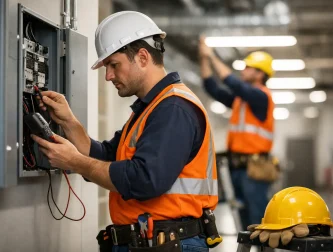
Commercial electrician services for compliant, efficient premises, fro

Citroën has unveiled ë-Berlingo, the latest version of its multi-awa
