York
08:00 AM - 05:00 PM
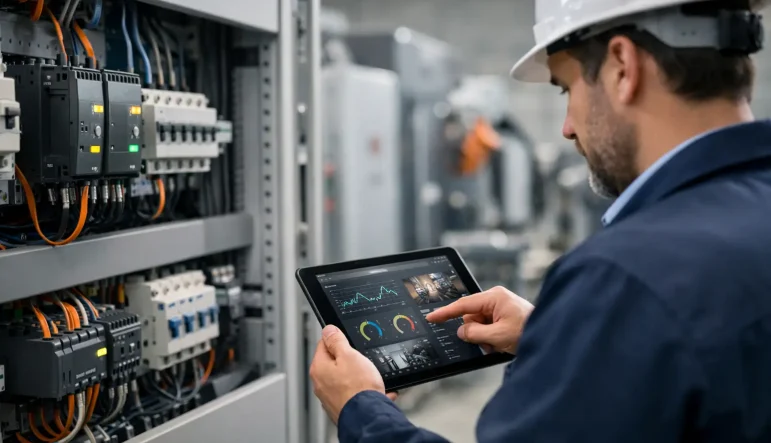
A distribution board rarely gives much warning before a fault starts costing money. More often, the signs are there in the background – rising load, poor power quality, overheating connections, nuisance tripping, unexplained energy use. Smart monitoring in industrial electrics gives operators a clearer view of those early signals, so maintenance decisions are based on evidence rather than guesswork.
For industrial sites, that matters because electrical performance is tied directly to uptime, safety and compliance. A missed issue in a panel, feeder or critical circuit can disrupt production, affect plant reliability and create unnecessary risk for staff and contractors. The value of monitoring is not simply that more data is available. It is that the right data, collected consistently, helps facilities teams act before a minor issue becomes an operational problem.
In practical terms, smart monitoring is the use of connected devices and measurement systems to track the condition and performance of electrical infrastructure. That can include current, voltage, power factor, harmonics, temperature, insulation condition, breaker status and energy consumption across selected assets or entire systems.
The word smart gets overused, so it is worth being specific. In an industrial setting, smart monitoring is not just remote visibility on a screen. It is the structured collection of live or near-live electrical information that can support alarms, trending, fault investigation, maintenance planning and reporting.
Some sites start with a focused application, such as monitoring key switchgear, high-load machinery or a single production area. Others build a wider system across substations, distribution equipment and critical plant. Neither route is automatically better. It depends on the age of the installation, the site’s operational priorities and how quickly the data can be turned into action.
Traditional inspection and testing remains essential. Planned surveys, verification and maintenance are still the basis of a safe electrical system. The limitation is that periodic checks only show what is happening at the moment of inspection.
Industrial environments are less predictable than that. Loads vary across shifts. Temporary plant gets added. Equipment ages unevenly. Heat, dust, vibration and moisture affect components over time. If a site only relies on scheduled checks, it can miss developing issues between visits.
That is one reason more operators are using monitoring alongside routine electrical maintenance. The combination is stronger than either approach on its own. Inspection confirms compliance and physical condition. Monitoring adds operating context, including what happens under real production demand.
For a facilities manager, this can mean fewer surprises. For engineering teams, it means fault finding with a timeline rather than a blank page. For procurement and leadership teams, it can support a clearer case for repair, upgrade or replacement works.
Not every circuit needs the same level of attention. The best results usually come from identifying where failure would cause the greatest operational or safety impact.
Critical incomers, main switchboards, motor control centres and high-demand process equipment are common priorities. Refrigeration systems, pumps, compressors, conveyor systems and ventilation plant also make sense where electrical interruption affects output or environmental control. In transport and infrastructure settings, the priority may sit with resilience, service continuity and statutory obligations.
There is also a strong case for monitoring assets that have shown previous instability. Recurrent tripping, unexplained overheating, uneven phase loading or rising energy consumption often point to a condition worth tracking properly.
This is where an experienced contractor adds value. Installing monitoring hardware is only one part of the job. The more important question is what needs to be measured, where sensors should be placed and how the information will be used by the people responsible for the site.
Electrical monitoring is often discussed in terms of efficiency, but safety is just as important. Abnormal temperatures, overloaded circuits and deteriorating power quality can all contribute to unsafe conditions if left unchecked.
On busy industrial sites, warning signs can be easy to miss without measured data. A cabinet may remain closed. An intermittent fault may clear before an engineer attends. A protective device may trip only under certain production conditions. Monitoring helps establish whether a one-off event is genuinely isolated or part of a developing pattern.
That has implications for compliance as well. While monitoring does not replace formal inspection, test certification or competent installation work, it can support a more defensible maintenance regime. When a site can show that critical assets are being observed, trends reviewed and alarms investigated, it strengthens the overall approach to electrical risk management.
For regulated environments, that extra visibility is often valuable. Approved, properly documented work and clear records matter when clients, insurers or auditors need assurance that systems are being managed responsibly.
Good monitoring can answer useful operational questions. Are peak loads rising beyond design expectations? Is one phase consistently carrying more than the others? Are harmonic levels affecting sensitive equipment? Is a panel running hotter during specific shifts? Are breakers operating in a pattern that suggests instability elsewhere on the network?
Those answers can shape better decisions. A site may discover that what looked like equipment failure is actually a supply quality issue. It may find that a proposed capacity upgrade is not yet necessary, or that an apparently minor nuisance trip is tied to a broader loading problem.
At the same time, more data does not automatically mean more clarity. Poorly configured systems can overwhelm teams with alarms that no one trusts. Sensors placed in the wrong locations create noise rather than insight. Dashboards look impressive, but if no one reviews the trends or understands the thresholds, the site gains very little.
That is why smart monitoring in industrial electrics works best when it starts with a clear maintenance and operational purpose. The aim should be to improve decisions, not just to increase visibility.
One trade-off is coverage versus depth. A site can monitor many assets at a basic level or a smaller number in much greater detail. The right balance depends on whether the main concern is broad oversight or close observation of critical points.
Another is retrofit practicality. Older installations may support monitoring, but access, panel condition, available space and outage windows can limit what is sensible. In some cases, a staged approach is more realistic than a full rollout.
There is also the question of integration. Some clients want monitoring data folded into existing building or energy management systems. Others prefer a standalone platform for specific electrical assets. Integration can improve visibility across a site, but it may also increase complexity and cost.
Budget should be considered properly, though not only in terms of first cost. A cheaper setup that produces unreliable readings or repeated false alarms can waste more time than it saves. Equally, a highly sophisticated system may be excessive for a smaller site with straightforward loads and a stable maintenance profile.
The strongest projects usually begin with a survey of the existing electrical installation and the operational risks attached to it. That means understanding the age and layout of infrastructure, the criticality of different assets, known pain points and how maintenance is currently managed.
From there, the design should follow the site rather than the other way round. Monitoring points, communications methods, alarm thresholds and reporting requirements need to reflect actual working conditions. A manufacturing facility, for example, will not have the same priorities as a warehouse, rail environment or mixed-use commercial estate.
Installation quality matters as much as system design. Devices must be fitted correctly, labelled clearly and commissioned properly. Data should be validated so that the team knows the readings are dependable from day one. If staff are expected to respond to alarms or use trend reports, they also need the right briefing or training.
This is one area where a full-service contractor can make the process more practical. SJB Smart Electricals works across surveys, installation and training, which helps clients avoid the gap between fitting equipment and knowing how to use it effectively.
Industrial maintenance is rarely improved by reacting faster to the wrong problem. It improves when teams can identify what is changing, where the risk sits and whether action is urgent, planned or unnecessary.
Smart monitoring supports that shift. It can help sites move away from broad assumptions such as replacing equipment purely on age, or delaying intervention because a fault has not yet caused a shutdown. Instead, maintenance can be guided by measured behaviour and operating history.
That does not remove the need for engineering judgement. A competent person still needs to interpret the findings, inspect the physical installation and decide on the correct remedial action. But with stronger information behind those decisions, the outcome is usually more controlled and more defensible.
For industrial operators, that is the real value. Not a screen full of figures, but a clearer understanding of how the electrical system is behaving and what needs attention before reliability, safety or compliance start to suffer. When monitoring is specified carefully and used with purpose, it becomes less about technology and more about running a site with fewer assumptions.
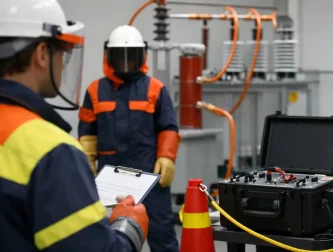
Choose an HV approved training course that builds practical competence

Citroën has unveiled ë-Berlingo, the latest version of its multi-awa
