York
08:00 AM - 05:00 PM
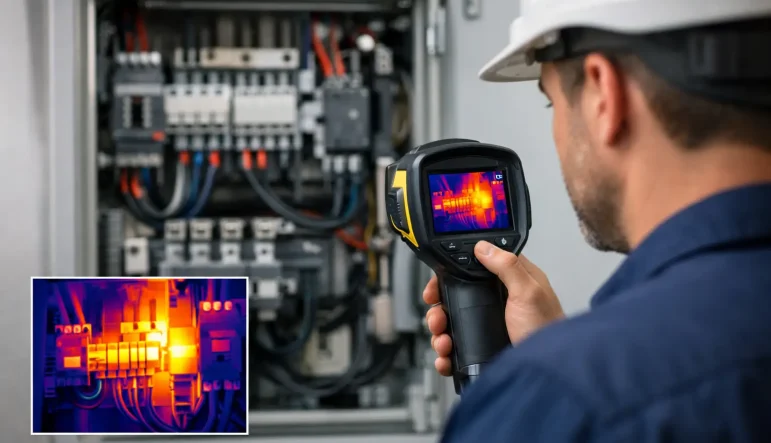
A distribution board can look perfectly serviceable and still be running hot at one termination. That is exactly why an electrical thermal imaging survey review matters. It turns hidden heat into visible evidence, helping property owners, facilities teams and duty holders spot developing faults before they lead to outage, damage or fire.
Thermal imaging is not a replacement for electrical testing, nor is it a box-ticking exercise for a compliance file. Used properly, it is a condition-based survey method that helps identify abnormal temperature patterns across live electrical equipment. For domestic clients, that may mean reassurance around a consumer unit, EV charger or heavily used final circuits. For commercial and industrial sites, it often means early visibility of loose connections, unbalanced loads, overloaded components and failing equipment in panels, switchgear, motor control centres and distribution systems.
A good review is not just a collection of colourful images. It should explain what was inspected, under what conditions, what anomalies were found and how urgent each issue appears to be. Without that context, even clear thermal images can be misleading.
The most useful reports set out the scope first. That means identifying the boards, circuits, plant or locations covered, along with any access limitations. Live load conditions also matter. If equipment is lightly loaded at the time of survey, some faults may not present clearly. A credible electrical thermal imaging survey review should say so plainly rather than overstate certainty.
Temperature difference is usually more valuable than absolute temperature on its own. A warm component is not automatically faulty. Some equipment runs hotter by design, and ambient conditions can affect readings. What matters is whether one phase is significantly hotter than the others, whether a connection is hotter than comparable terminations, or whether there is a localised hotspot that does not fit normal operating behaviour. The review should interpret that pattern, not simply record a number.
Thermal cameras are excellent at showing symptoms. They do not, by themselves, confirm root cause. A hotspot might point to a loose termination, corrosion, overload, poor contact pressure or component deterioration. In some cases, the image suggests a concern but follow-up testing is needed before remedial work is specified.
That is where contractor experience matters. In a commercial unit, for example, a warm breaker may be linked to expected load and enclosure design rather than immediate defect. In an industrial setting, a hotter cable termination could indicate a connection issue, but production load profile, harmonics and ventilation all need consideration. The review should reflect that level of judgement.
This is also why thermal surveying works best as part of a wider maintenance approach. If a site already has periodic inspection records, load data and maintenance history, the thermal review becomes far more valuable. It can confirm known stress points, highlight deterioration between formal inspections and help prioritise where engineering time should be spent.
The same survey method is used across sectors, but the purpose changes with the setting.
In homes, the emphasis is usually on safety and reassurance. A survey may focus on a consumer unit, meter tails, cooker circuits, shower circuits, heat pump supplies or recently added equipment such as an EV charger. Domestic clients often need a clear explanation of whether the issue is urgent or simply something to monitor.
In commercial premises, continuity is often the main concern. Retail units, offices, schools and managed properties rely on electrical systems staying available during working hours. Here, thermal imaging helps identify defects before they interrupt occupants or tenants. The review should tie findings back to operational impact as well as safety.
Industrial and infrastructure environments demand a more rigorous reading. Higher loads, critical equipment and restricted shutdown windows mean that a hotspot can carry greater risk. In these settings, a report needs to support maintenance planning, isolation strategy and remedial prioritisation. Approved, experienced contractors are expected to distinguish between a defect requiring immediate intervention and a condition that can be safely managed until a planned outage.
A professional review should be easy to read without oversimplifying the technical detail. Decision-makers need enough information to act, whether they are a homeowner, a facilities manager or a procurement lead.
Images should be supported by plain-language findings. If a thermal image shows elevated temperature at a cable lug, the report should identify the asset, explain the likely concern and state what should happen next. Vague wording such as “monitor as necessary” is rarely helpful unless the review also says when, how and under what operating conditions monitoring should take place.
Priority grading is another sign of a useful report. Not every anomaly carries the same risk. Some defects justify urgent attendance because of fire risk, equipment damage or likelihood of failure. Others may be suitable for planned remedial works at the next maintenance window. A review that treats every issue as equally critical is not especially practical. Equally, one that downplays obvious hotspots is not credible.
The strongest reports also record limitations honestly. If covers could not be removed, if areas were inaccessible, or if major plant was not under representative load, that should be stated clearly. Good surveying is as much about accurate boundaries as it is about findings.
One of the most common misunderstandings is that thermal imaging will find every electrical defect. It will not. If a circuit fault is not producing a detectable heat pattern at the time of inspection, the camera may not reveal it. Insulation resistance issues, hidden damage in non-accessible areas and some intermittent faults may still require conventional inspection and testing.
Equally, thermal imaging should not be treated as a substitute for fixed inspection intervals where those are required. It is a complementary survey method. Its value lies in checking equipment under live operating conditions, which traditional dead testing cannot fully replicate. The best maintenance decisions usually come from combining both approaches rather than relying on one alone.
There are practical limits as well. Reflective surfaces can affect readings. Enclosure design may restrict line of sight. Weather and ambient temperature can influence external surveys. Internal surveys often need safe access arrangements and competent operatives working within appropriate procedures. A serious contractor will set those limits out from the start.
If you are seeing nuisance tripping, unexplained downtime, recurring fuse or breaker issues, or signs of localised heating such as discolouration near equipment, a survey is usually justified. It is also sensible after significant load changes, board alterations, major plant additions or tenancy changes in commercial buildings.
For many organisations, the strongest case is preventive rather than reactive. A scheduled review can identify developing issues before users notice any symptoms at all. That matters where business continuity is critical, where shutdowns are expensive, or where electrical infrastructure supports public-facing operations.
There is a cost judgement to make. Not every small property requires routine thermal imaging at high frequency, and not every warm component needs immediate replacement. The right interval depends on load profile, age of installation, criticality of equipment, operating environment and maintenance history. A lightly loaded domestic installation may need a different approach from a busy warehouse, a manufacturing plant or transport infrastructure.
Competence matters more than the camera model. The value comes from safe access, correct interpretation and clear reporting. Clients should expect a provider to understand electrical systems, survey constraints and the standards that shape maintenance decisions.
An approved electrical contractor with experience across domestic, commercial and industrial settings is in a better position to judge what a thermal anomaly means in context. That includes knowing when an issue can be monitored, when it requires further testing and when remedial action should be arranged without delay. For clients managing multiple asset types, that breadth is especially useful because it reduces the gap between diagnosis and delivery.
This is where a service-led contractor such as SJB Smart Electricals can add practical value. Surveying, remedial works and technical understanding sit within the same working relationship, which supports faster decisions and clearer accountability.
The right review should leave you with more than pictures. It should tell you what condition your equipment appears to be in today, where the credible risks sit, and what sensible next step follows. If it does that well, thermal imaging becomes more than a report – it becomes a useful part of keeping people safe and operations reliable.
Heat rarely appears without a reason. The benefit of finding it early is not just avoiding failure, but having the time to deal with the issue properly.

Understand the benefits of battery storage at home or office, from res

Citroën has unveiled ë-Berlingo, the latest version of its multi-awa
