York
08:00 AM - 05:00 PM
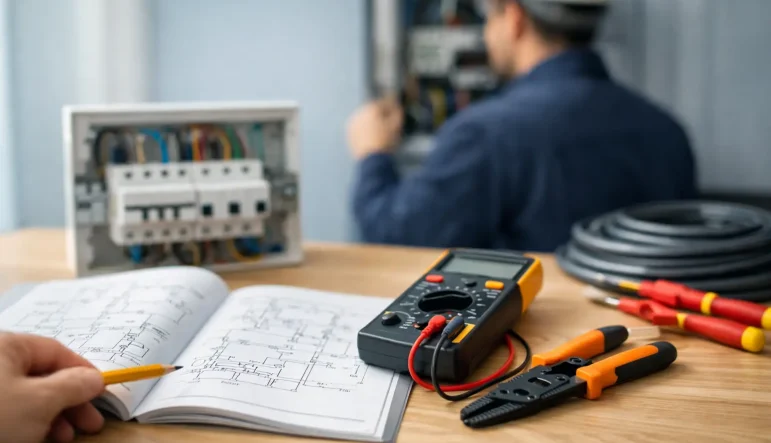
If you are booking training for yourself or your team next year, the BS7671 wiring regulations update course 2026 is not just another certificate to file away. It is the point where current knowledge, site practice and compliance expectations need to line up properly – especially if your work crosses domestic, commercial and industrial environments.
For working electricians, supervisors and duty holders, the real question is not whether the Wiring Regulations matter. It is whether the course you choose gives you usable understanding of the latest requirements, or simply enough to scrape through an exam. That difference matters on live projects, during inspection and testing, and when you are asked to justify design or installation decisions.
This course is usually aimed at qualified electricians, approved contractors, inspectors, testers, maintenance engineers and technically responsible managers who already work with BS 7671 in practice. In some cases, facilities teams and contract managers also take it because they are responsible for overseeing electrical work, signing off standards or selecting competent providers.
For homeowners or general property clients, this is not normally a course you would attend unless you have a direct technical role. The value for clients is different. You want contractors whose knowledge is current, whose work reflects the latest edition requirements, and whose staff can explain compliance clearly when carrying out surveys, remedial work or new installations.
In commercial and infrastructure settings, the need is even more practical. If you operate premises with higher occupancy, public use, production demands or critical systems, outdated understanding can lead to specification errors, delays at handover or expensive remedial action later. Training helps reduce that risk, but only when it is tied back to real installation standards.
SJB Smart Electrical Training in BS7671 wiring regulations update will do more than repeat regulation numbers. It will explain what has changed, why those changes affect design and installation choices, and where people commonly misapply the rules.
That usually includes changes to protection measures, circuit design considerations, equipment selection, inspection and verification points, and any amendments that affect how work is recorded or certified. You will also spend time on interpretation. That is important because the Wiring Regulations are detailed, and people often know the headline change without understanding the limits or conditions around it.
For example, this course will help candidates distinguish between what is mandatory under Health and Safety Act and Electricity at Work Regulations 1989, what is advisory good practice, and what may be influenced by the installation environment under BS7671. A domestic rewire, a retail fit-out and an industrial plant area may all sit under the same overarching framework, but the practical application is not identical.
There is a tendency in the industry to treat update training as a compliance exercise. Attend the course, pass the assessment, keep the certificate current. That approach may satisfy a box-ticking process, but it does not automatically improve technical decisions on site.
The reason this course on the BS7671 4th Amendment update matters is that many electrical businesses are now expected to show competence in more visible ways. Clients ask more questions. Main contractors and the law requires evidence. Facilities teams want reassurance that design, installation and inspection have been completed against the correct version of the regulations. If your understanding is dated, that tends to show up quickly in survey findings, tender clarifications and commissioning stages and puts you at risk from prosecution and worse, risk to life.
This is particularly relevant where electrical work interfaces with fire safety systems, energy efficiency measures, transport environments or production-critical plant. In those settings, errors are rarely isolated. One poor judgement in circuit protection or equipment choice can affect programme, cost and operational continuity.
Not every training provider delivers the same standard, even when the course title looks identical. The key difference is we understand the regulations as working requirements, not just exam content in real life situations across many industries.
We are a provider with real contracting and inspection experience and will teach the subject with more clarity. We can explain how a regulation applies on an actual job, where the grey areas tend to arise, and what evidence would stand up under scrutiny. That is useful for experienced electricians and even more useful for those moving into supervisory or qualifying roles.
A short-format update may suit someone who is already fully engaged with the latest changes and simply needs formal confirmation is ideal. A more detailed programme is often better for those returning to assessment after a long gap, or for businesses standardising knowledge across a wider team and we can cater for all scenarios.
Assessment method matters too. If candidates are only coached to pass the exam, knowledge retention can be weak. Our course is taught with context, examples and room for questions, you are more likely to apply it correctly once you are back on site.
Before committing to any BS7671 wiring regulations update course, it is worth knowing a few practical points. Does the team need a course to reflect the current edition and amendments in full? Are you needing it aimed at practising electricians rather than complete beginners? Do your team need refreshing on Inspection and Testing, EV or new areas such as thermal imaging?
For employers, there is another consideration. Do you need one or two individuals trained, or do you need consistency across an entire team? Those are different training solutions that we can cater for based on your business and team needs. Sending one supervisor on a course may support oversight, but it does not always solve variation in site practice. Where businesses handle multiple contracts or regulated premises, broader competence planning is often the better route so talk to us to help you achieve the right course for your team.
We are a contractor and trainer that understands surveys, installation and training can often spot where knowledge gaps are likely to affect project delivery, not just exam performance. SJB Smart Electricals sits in that space, with the practical perspective that training should support safe, compliant work rather than stand apart from it.
One common misunderstanding is that an update course makes someone fully competent in every area of electrical work. It does not. BS 7671 knowledge is essential, but competence also depends on experience, task type, environment, inspection skills and the ability to recognise limits.
Another misunderstanding is that the course is only for electricians carrying out new installations. In reality, it also matters for those involved in alterations, remedial works, condition reporting and contract supervision. If you are specifying work, checking designs or reviewing certification, current regulatory understanding still matters.
There is also a belief that experienced electricians can safely skip formal updates because they have been applying the regulations for years. Experience is valuable, but regulations evolve. So do interpretations, accepted practices and client expectations. Long service is not a substitute for current knowledge.
For individual electricians, passing the course supports credibility and shows continued professional development (CPD). It shows that your understanding has been refreshed against the latest requirements and that you are keeping pace with industry standards. That can strengthen employability, support assessment routes and improve confidence when discussing compliance with clients or assessors.
For businesses, the value is broader. Trained staff are better placed to produce compliant work, identify issues earlier and reduce inconsistency across projects. That helps with quality control, tender confidence and client assurance. It can also support relationships with insurers, auditors and procurement teams who want evidence that competence is being maintained properly.
There is a commercial angle here, but not in a sales-driven sense. Good training protects delivery. It reduces the likelihood of preventable non-conformities, disputes over standards, and remedial work caused by avoidable misunderstandings. In busy electrical contracting, that matters as much as the qualification itself.
The people who benefit most from update training are usually those who prepare properly and follow it through afterwards. That means arriving with a working knowledge of the regulations, bringing real questions from your own projects, and reviewing how the course content affects your current methods.
After the course, the useful step is not simply filing the certificate. It is checking template forms that are updated in this amendment 4, inspection processes, design assumptions and team discussions against what you have learned. If a regulation change alters how your business approaches certain installations, that needs to be reflected in daily practice.
Our course will leave you clearer, not just certified. It helps you make sounder technical judgements, ask better compliance questions and deliver work with greater confidence, it has done the job properly.

Considering plug-in solar for homes? Understand UK safety, DNO notific

Citroën has unveiled ë-Berlingo, the latest version of its multi-awa
