York
08:00 AM - 05:00 PM
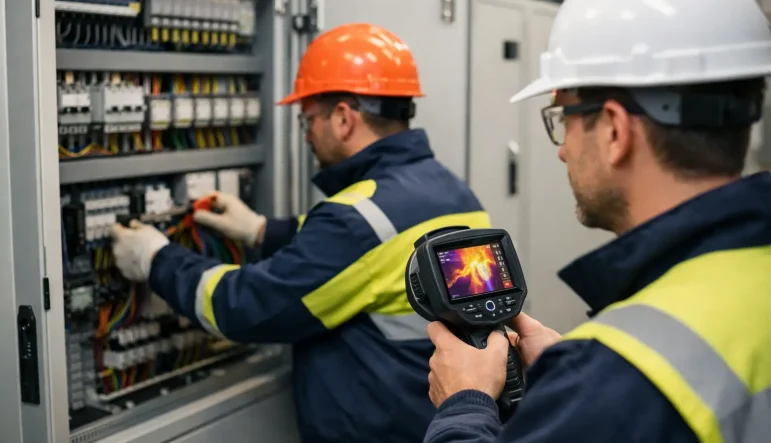
A failed distribution board at the wrong moment can stop production, delay deliveries and create a safety issue that reaches far beyond one room or one circuit. That is why industrial electrical services are not simply a maintenance line item. For most sites, they are part of operational control.
In industrial settings, electrical work sits close to business continuity. Manufacturing plants, warehouses, processing facilities and transport environments rely on systems that must perform consistently under load, often across ageing infrastructure, changing layouts and tight programme pressures. The right contractor is not just there to install equipment. They help a site understand condition, manage risk and keep work aligned with standards.
Industrial electrical services usually include surveys, testing, installation, upgrades, fault finding, planned maintenance and, in some cases, workforce training. The exact mix depends on the site. A newer facility may need support with expansion and capacity planning, while an older one may need remedial work, compliance checks and a clearer view of system condition.
This is where experience matters. Industrial sites rarely present neat, isolated tasks. One issue can expose another. A planned machinery move may reveal undersized cabling. A lighting upgrade may raise questions about existing containment. A survey of one area may show broader concerns around earthing, protection or distribution.
A dependable electrical partner looks at the full operating environment, not just the immediate job. That approach tends to prevent repeat callouts and helps clients make better decisions about priority, budget and programme.
There is often a tendency to focus on the visible part of the work – new equipment, replacement boards, additional circuits, improved lighting. Those are important outcomes, but the real value often sits behind them.
Good industrial electrical services reduce unplanned downtime by identifying weaknesses before they become failures. They support compliance by making sure work is assessed, specified and completed properly. They improve safety for staff, contractors and visitors by reducing exposure to damaged equipment, overloaded systems and ad hoc modifications.
They also help procurement and facilities teams manage risk more clearly. When a contractor can survey, install and advise on workforce competence, the client gets a more joined-up service. That can be especially useful in regulated or high-demand environments where fragmented responsibility often creates delays or uncertainty.
Before any meaningful upgrade or remedial programme begins, a site needs an accurate view of what is already in place. That sounds obvious, yet many industrial sites are operating with partial records, legacy alterations or equipment that has outlasted its original design assumptions.
A proper electrical survey gives decision-makers a factual basis for action. It can highlight deterioration, non-compliance, spare capacity issues and installation defects. It can also show where systems are performing adequately and do not need immediate intervention. That matters because not every recommendation should lead to urgent replacement. In some cases, monitoring and phased work are more sensible than a large reactive spend.
For clients managing budget constraints, this is often the difference between controlled improvement and expensive disruption. A credible contractor should be able to explain what needs attention now, what can be scheduled later and what should be watched over time.
No two industrial environments carry exactly the same electrical risk profile. A light industrial unit used mainly for storage will have different demands from a heavy production site with process equipment, variable loads and round-the-clock operation. Transport-related environments bring another layer of complexity, particularly where public access, operational uptime or safety-critical systems are involved.
That is why standardised advice is rarely enough. The same recommendation can be proportionate on one site and excessive on another. Good contractors assess usage patterns, load demands, access limitations, maintenance windows and the consequences of failure before proposing a solution.
This practical judgement is often what separates a basic electrical service from one that genuinely supports operations.
Industrial installation is rarely just about technical correctness on paper. It has to fit the realities of the site. Work may need to be phased around production. Shutdown windows may be short. Certain areas may require permits, escorts or out-of-hours access. Existing infrastructure may limit options for routing, isolation or expansion.
An experienced contractor plans around those constraints without losing sight of compliance or workmanship. That includes selecting suitable equipment, coordinating safe isolation, protecting surrounding operations and documenting the work properly.
It also means recognising when the lowest-cost option is not the best value. A cheaper installation that complicates future maintenance or leaves no allowance for expansion can become more expensive very quickly. In industrial settings, design practicality matters as much as initial cost.
When systems fail, speed matters. But speed without method can waste time and increase risk. Industrial fault finding should be disciplined, evidence-based and carried out by people who understand how systems behave under real operating conditions.
Intermittent trips, nuisance outages, overheating and unexplained load issues are not always caused by the most obvious component. The visible symptom may sit some distance from the underlying cause. That is why a thorough diagnostic approach is essential.
For clients, this has a simple benefit: fewer repeat disruptions. A proper repair should address the source of the fault, not just restore power temporarily and leave the same issue waiting to return.
Many industrial facilities are managing a mix of old and new infrastructure. Full replacement is not always practical, and in some cases it is not necessary. Planned maintenance and phased upgrades can extend asset life, improve safety and spread cost more sensibly.
This approach works best when there is a clear plan. Rather than responding only when something fails, the site can prioritise areas with the highest operational or compliance risk. Distribution equipment, emergency systems, lighting, containment and final circuits may all sit at different stages of their service life. Treating them as one undifferentiated problem usually leads to poor budgeting.
A contractor with survey and installation capability can help build a realistic sequence of works. That gives facilities teams and business owners more control over outage planning and capital spend.
Electrical safety on industrial sites is not only about the contractor’s work. It also depends on how site teams operate around electrical systems day to day. Where clients need it, training can strengthen competence, reduce unsafe behaviours and support better internal procedures.
This is particularly useful in environments where maintenance staff, supervisors or operational teams interact regularly with electrical equipment. Training does not replace specialist electrical work, but it can improve awareness, escalation and safe working practice.
For organisations that want one provider relationship covering assessment, implementation and capability support, that combination is practical. It reduces handover gaps and helps align technical work with the way the site is actually managed.
Price will always matter, but in industrial work it should not be the only filter. Clients should also look at approval status, sector experience, ability to work across surveys and installation, and confidence in live operational environments. Communication matters as well. Decision-makers need clear explanations, realistic programmes and documentation they can rely on.
There is also value in breadth. A contractor that understands domestic, commercial, industrial and transport-related environments can often bring wider practical judgement to complex projects. That does not mean every site needs a large national provider. It means the contractor should be able to demonstrate competence in settings where standards, access and risk are taken seriously.
For many clients, the strongest choice is a provider that combines hands-on delivery with professional credibility. That is especially relevant where compliance, uptime and workforce safety are all under pressure at the same time. SJB Smart Electricals operates in that space, supporting clients with surveys, installation and training across demanding environments.
The best time to review your electrical infrastructure is usually before the next fault, the next expansion or the next audit forces the issue. When industrial electrical services are approached as part of operational planning rather than emergency response, sites tend to run more safely, more reliably and with fewer costly surprises.

Learn how to choose electrical survey provider expertise for safe, com

Citroën has unveiled ë-Berlingo, the latest version of its multi-awa
