York
08:00 AM - 05:00 PM
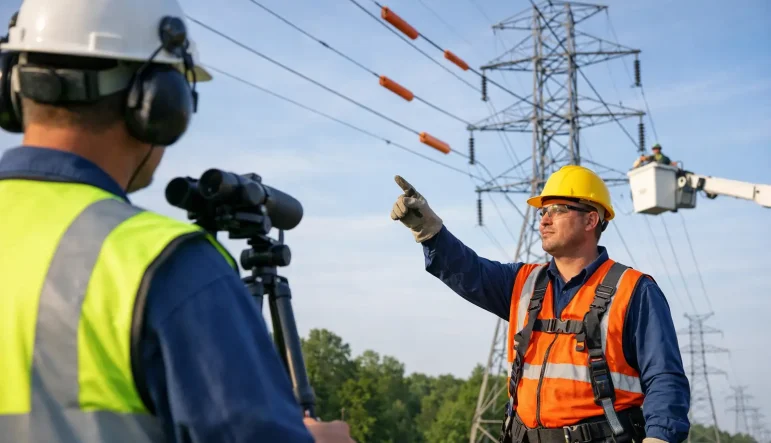
One poor assumption around an overhead line can stop a job, damage plant, or put lives at risk in seconds. That is why GS6 training for working around high voltage lines matters well before work starts. It gives contractors, site managers, plant operators and duty holders a clear understanding of what safe planning and safe behaviour look like when overhead electrical hazards are present.
For many organisations, the real challenge is not recognising that overhead lines are dangerous. It is managing the routine decisions that lead people and equipment closer to danger than intended. A delivery route changes, a telehandler is used instead of a smaller machine, spoil is stacked in the wrong place, or a subcontractor arrives without a proper site briefing. GS6 training is valuable because it addresses those practical failures, not just the theory.
GS6 refers to the Health and Safety Executive guidance for avoiding danger from overhead power lines. In practical terms, training built around GS6 helps people identify overhead line risks, understand safe clearances, and apply appropriate controls before work begins and while it is underway.
That usually includes how to recognise different site situations where overhead lines present a hazard, how plant and loads can encroach on danger areas, and what controls are expected for activities such as excavation, lifting, loading, access routes and temporary works. Good training also deals with emergency arrangements, because prevention is the priority but preparedness still matters.
The best courses do not treat every site the same. Working near lines on a domestic boundary, an agricultural site, an industrial compound or a transport-related project can involve very different plant movements, responsibilities and public interfaces. The principle is consistent, but the control measures need to fit the environment.
Decision-makers are often under pressure to prove competence, meet programme dates and maintain productivity. That can create a temptation to view safety training as a compliance step rather than an operational control. Around overhead lines, that is a mistake.
The value of GS6 training for working around high voltage lines is that it improves judgement on site. It helps supervisors recognise when a planned method is no longer suitable. It helps operators understand why a seemingly safe movement may still be unsafe once boom height, ground levels or load swing are considered. It helps planners ask the right questions earlier, when there is still time to redesign access or change equipment.
There is also a legal and commercial side to it. Clients, principal contractors and insurers increasingly expect clear evidence that electrical risks have been understood and managed by competent people. Training does not remove the need for proper planning, permits, supervision or exclusion zones, but it supports all of them. When competence is weak, paperwork rarely saves the day.
The short answer is that anyone whose work may bring them, their tools, their plant or their materials near overhead electrical lines should have an appropriate level of understanding. That often includes site supervisors, plant operators, groundworkers, utilities teams, facilities personnel, surveyors, logistics teams and contractors carrying out delivery or lifting activities.
Not everyone needs the same depth of content. A machine operator may need more focus on movement limits, visibility, and practical controls during operation. A manager or procurement lead may need stronger understanding of planning responsibilities, contractor competence and site arrangements. For larger projects, the strongest results usually come when training is aligned to role rather than delivered as a generic session to everyone.
This is where an experienced electrical contractor and training provider can add real value. A course shaped by live site conditions tends to be more useful than one built around abstract examples alone.
Overhead line incidents rarely happen because nobody knew electricity was dangerous. They happen because risk becomes normalised. Repetitive work, familiar sites and schedule pressure can all reduce caution.
A typical example is plant operating on uneven ground. The operator may judge the clearance from one position, but as the machine moves or the boom rises, that judgement changes. Another is materials handling. Long conductive items, scaffold tubes, ladders or metal sheeting can create risk even where heavy plant is not involved.
Training also helps teams manage less obvious hazards, such as changes to traffic routes, temporary storage areas beneath lines, or subcontractors arriving on site without understanding exclusion zones. On mixed-use sites, pedestrian workers can be exposed as well as operators. Good GS6 awareness brings these secondary risks into view.
A useful course should be clear, current and grounded in real working conditions. It should explain the guidance in plain terms and connect it to the actual tasks learners carry out. If people leave training knowing the rule but not how to apply it to their day-to-day work, the course has missed the mark.
Strong delivery normally includes visual examples, site-based scenarios and discussion around planning controls. It should cover hazard identification, line voltage awareness where relevant, safe systems of work, signage, barriers, and the limits of relying on visual judgement alone. Emergency response should also be addressed in practical language, including what to do if contact is made or suspected.
For organisations operating across more than one sector, flexibility matters. Domestic projects may involve access equipment and constrained boundaries. Commercial work may involve deliveries and maintenance contractors. Industrial and infrastructure sites may involve large mobile plant, complex work sequencing and higher operational consequences. One-size-fits-all training can be too broad to be fully effective.
When selecting a provider, buyers should look beyond attendance certificates. The key question is whether the training reflects the real risk profile of the work. That means checking the provider’s experience with electrical hazards, the sectors they support, and whether they understand both classroom content and live site realities.
It is also worth considering how the training fits into wider safety management. If your organisation already has permit systems, RAMS processes, induction procedures and supervisory controls, the course should reinforce those arrangements rather than sit separately from them. If those systems are weak, training may highlight gaps that need attention before site work proceeds.
A credible provider should be able to speak confidently about how GS6 principles apply to surveys, planning, installation activity, contractor control and ongoing site operations. For clients that need both technical delivery and workforce development, that joined-up understanding is often more useful than buying training in isolation. This is one reason businesses such as SJB Smart Electricals are well placed to support organisations that need practical competence as well as compliance confidence.
There is an important trade-off here. Training improves awareness and competence, but it cannot compensate for poor site design or weak supervision. If vehicles are routed under lines when safer alternatives exist, if exclusion zones are not maintained, or if plant selection is unsuitable, trained staff are still being asked to work in avoidable danger.
The most effective approach combines training with surveys, clear site rules, physical controls and active management. In some cases, work may need to be rescheduled, relocated or redesigned. That can feel inconvenient in the short term, but overhead line incidents carry far greater human and commercial cost.
For householders and smaller commercial operators, the same principle applies on a smaller scale. If contractors are bringing access equipment, ladders or lifting gear onto land near overhead lines, risk should still be assessed properly. The scale of the job does not reduce the seriousness of electrical contact.
Overhead line risk is not limited to major construction sites. It appears in property maintenance, rail-adjacent work, airport environments, industrial yards, agricultural settings, utilities activity and redevelopment projects. The details vary, but the need for disciplined planning remains the same.
That is why GS6 training has such broad relevance. It supports safer decisions at every stage, from survey and tendering through to daily site operations. It also gives clients a stronger basis for asking informed questions of contractors and service partners.
If your work brings people, plant or materials anywhere near overhead electrical hazards, competence should not be assumed. It should be built, checked and refreshed where needed. A well-trained team does more than satisfy a requirement on paper – it is better prepared to stop unsafe work before the risk becomes an incident.
The most useful starting point is simple: treat overhead lines as an active operational risk, not part of the background, and make sure the people planning and carrying out the work are trained to recognise what safe really looks like.
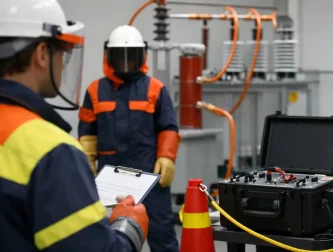
Choose an HV approved training course that builds practical competence

Citroën has unveiled ë-Berlingo, the latest version of its multi-awa
