York
08:00 AM - 05:00 PM
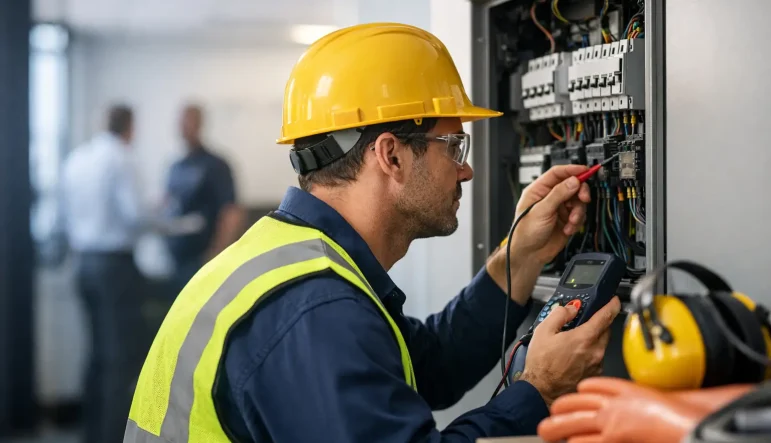
A blown fuse in a small office is inconvenient. A failed distribution board on a live industrial site can stop operations, damage equipment and put people at real risk. That is why knowing how to improve workplace electrical safety is not a box-ticking exercise. It is part of keeping people safe, maintaining compliance and protecting day-to-day continuity.
Electrical risk does not sit in one place. It can come from ageing installations, overloaded circuits, damaged portable appliances, poor contractor control or staff who have never been shown what unsafe looks like. The right approach is not simply to react when something goes wrong. It is to build a safer electrical environment through assessment, competent work, routine checks and clear responsibilities.
If you want to improve workplace electrical safety, the first step is understanding where your actual exposure sits. That sounds obvious, but many workplaces rely on assumptions. A building may have had alterations over the years, equipment may have been added without reviewing load demands, and records may be incomplete or out of date.
A suitable electrical survey or inspection helps establish the condition of the installation and whether it remains appropriate for the way the premises are being used. In a commercial office, the concern may be portable equipment, extension leads and minor works carried out over time. In an industrial setting, the focus may be heavier loads, harsher environmental conditions and the consequences of downtime. In transport or infrastructure environments, the picture becomes more complex again because access, public interface and operational continuity all matter.
The point is that risk is site-specific. A generic policy will not tell you whether a consumer unit has defects, whether protective devices are adequate, or whether staff are using electrical equipment in ways that increase danger.
A large share of electrical incidents comes down to deterioration, unsuitable modification or neglected maintenance. Electrical systems age. Connections loosen, insulation degrades and equipment ends up doing more than it was designed to do.
Periodic inspection and testing provides evidence of condition rather than guesswork. It allows duty holders, property managers and facilities teams to identify issues before they develop into faults or hazards. It also supports compliance by showing that the installation has been assessed by competent professionals and that remedial work is being addressed.
This is where many organisations make a costly mistake. They treat inspection as a one-off requirement rather than part of an ongoing safety plan. In reality, the useful question is not whether the site passed last time. It is whether the installation is still safe now, after further use, environmental exposure and operational changes.
Minor defects may not shut a site down, but they should not be ignored. A damaged accessory, signs of overheating or repeated tripping can all point to wider issues. Acting early is usually cheaper and safer than waiting for failure.
Unsafe electrical behaviour often becomes routine because it appears to work. Staff use multi-way adapters because sockets are in the wrong place. Temporary leads become permanent. Damaged equipment stays in service because nobody wants to interrupt the job.
This is where procedure matters as much as hardware. Workplace electrical safety improves when everyday use is controlled properly. That means equipment should be suitable for the task, circuits should not be overloaded and damaged items should be removed from service immediately.
Portable appliance management is part of this, but it should be handled sensibly. Testing has value, especially in environments where equipment is moved, handled heavily or used in demanding conditions. However, labels alone do not create safety. User checks, visual inspections and prompt reporting are just as important. In lower-risk settings, over-testing can waste time without addressing the real causes of danger. In higher-risk settings, more frequent attention may be entirely justified. It depends on the equipment, the environment and how it is used.
One of the most practical answers to how to improve workplace electrical safety is also one of the most overlooked: make sure people know what they are looking at and what they are allowed to do.
Not every member of staff needs technical electrical knowledge, but they do need clear instruction. They should know how to spot common warning signs such as damaged plugs, exposed conductors, scorch marks, unusual smells, flickering supplies or recurring trips. They should also understand what not to do, including attempting makeshift repairs or using equipment that has been taken out of service.
For those with maintenance responsibilities, the standard needs to be higher. Training should match the level of exposure and the nature of the work. A caretaker in a school, a facilities operative in an office block and an engineer on an industrial site do not face the same risks. Good training reflects that reality rather than offering the same generic content to everyone.
A competent contractor can also help strengthen internal capability by identifying recurring issues, clarifying safe procedures and supporting better decision-making around repairs, upgrades and isolation.
A surprising number of incidents happen during maintenance, alteration or fault-finding rather than normal operation. Electrical work introduces risk quickly if responsibilities are unclear or if unqualified people are allowed to carry out tasks beyond their competence.
Safe isolation is a clear example. It is often mentioned, but not always applied with the discipline it requires. Simply switching something off is not the same as proving it is dead and securing it against reconnection. Where work is being done on or near electrical systems, permit procedures, lock-off arrangements and verification steps need to be appropriate to the setting.
Contractor control matters too. Decision-makers should know who is working on site, what standards apply and how work is being checked. Using authorised and approved electrical specialists is not just a procurement preference. In many environments, it is central to managing legal, technical and operational risk. SJB Smart Electricals works with clients across domestic, commercial, industrial and transport-linked settings where that level of control is expected, not optional.
There is no single formula for every workplace. An office may need better socket provision, clearer reporting routes and planned inspection intervals. A warehouse may need stronger controls around portable equipment, battery charging points and accidental cable damage. A manufacturing site may need tighter maintenance regimes, isolation procedures and coordination around machinery.
Moisture, dust, vibration, heat and public access all change the risk profile. So do shift patterns and business continuity requirements. For example, replacing ageing electrical infrastructure in a live operational site may improve safety significantly, but timing and phasing matter. Work has to be planned so risk is reduced without creating avoidable disruption elsewhere.
This is why practical electrical safety is always a balance between ideal standards and operational reality. The answer is not to accept lower standards. It is to apply the right controls in the right order, based on what the site actually demands.
Documentation should help you make decisions, not sit unused in a folder. Inspection reports, test results, remedial works, equipment registers and training records all have value when they are current and accessible.
Good records help show patterns. If one area repeatedly produces faults, there may be an underlying issue with installation quality, load demand or environmental conditions. If staff keep reporting damaged leads, supervision or equipment selection may need attention. If recommended remedials are consistently delayed, the risk is not just technical but managerial.
For organisations with multiple sites, record quality becomes even more important. Consistency makes it easier to prioritise budgets, track compliance and avoid missing known defects.
Many electrical hazards are visible before they become serious, but only if someone speaks up. Staff should know how to report defects quickly and should trust that those reports will lead to action.
That means avoiding mixed messages. If a business says safety comes first but expects people to work around obvious faults to keep things moving, hazards will go unreported or be normalised. A better standard is simple: if equipment is unsafe, it comes out of use until it has been assessed.
Managers set the tone here. When they respond promptly to reports, follow through on remedial work and communicate clearly about restrictions, the wider workforce is more likely to do the right thing.
The strongest electrical safety arrangements are not built through one inspection or one training session. They improve because someone takes ownership, reviews what is changing and acts before small issues become major ones.
If your workplace has grown, changed use, added equipment or inherited older electrical infrastructure, it is worth looking again at whether your current controls still match the risk. In practice, safer workplaces usually have the same foundations: competent assessment, suitable installations, planned maintenance, informed staff and approved contractors carrying out work to the right standard.
A workplace does not need to be high-risk on paper for electrical safety to deserve proper attention. It only takes one overlooked defect, one poor decision or one uncontrolled alteration to create a serious problem. The most reliable approach is to treat electrical safety as part of normal operational discipline, not as a response to the last incident.

Authorised person (AP) training helps duty holders build safe, compete

Citroën has unveiled ë-Berlingo, the latest version of its multi-awa
