York
08:00 AM - 05:00 PM
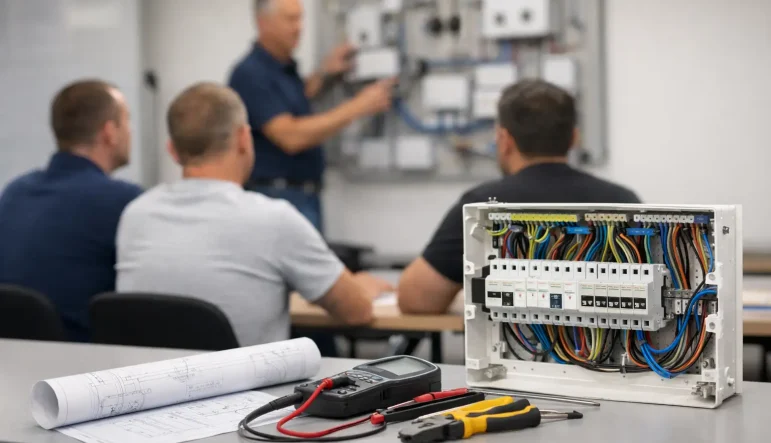
When an electrician books BS7671 wiring regulations training 4 day courses, it is rarely just about passing an exam. More often, it is about staying current, working with confidence, and making sure every installation, inspection, alteration, or recommendation stands up to scrutiny. For contractors, facilities teams, and those responsible for electrical safety, that is not a minor administrative task. It affects the quality of work on site, the standard of compliance, and the credibility of the people signing work off.
The Wiring Regulations are not static. They change to reflect technical developments, safety considerations, and practical lessons from the field. A short course built around BS 7671 gives practising electricians and related professionals a structured way to understand what has changed, what still applies, and how to interpret the regulations in real working conditions. That matters whether the job is domestic, commercial, industrial, or part of a transport or infrastructure setting where the consequences of error are far greater.
A four-day course is usually aimed at people who already work in the electrical sector and need focused, formal training on the current edition of the Wiring Regulations. It is not normally a beginner’s route into the trade. Instead, it serves those who install, inspect, design, maintain, or manage electrical work and need up-to-date regulatory knowledge.
The format suits working professionals because it is intensive enough to cover the regulations properly, but short enough to be practical. Over four days, the course can move beyond memorising clauses and instead help candidates understand how the book is used. That distinction matters. In real work, nobody benefits from vague familiarity with the regulations. People need to know how to navigate the standard, interpret requirements, and apply them under pressure.
Most learners taking this kind of course are preparing for an assessment linked to the current Wiring Regulations qualification. Even so, the strongest courses do more than coach for the test. They help candidates connect the text of BS 7671 with actual decisions made on site, from circuit protection and cable selection through to special locations and verification.
There is a reason the four-day structure remains popular. It respects the reality of the industry. Contractors, maintenance teams, and technical managers cannot always step away for long periods, but they still need proper training. Four concentrated days strike a workable balance between depth and operational practicality.
For experienced electricians, the pace can also be an advantage. Many are not starting from zero. They already understand installation work, common fault scenarios, and the pressures that come with deadlines and compliance responsibilities. What they need is a clear route through the latest edition of the regulations, with enough tutor input to challenge assumptions and clear up grey areas.
That said, the right course for one person may not be the right course for another. Someone who has been away from formal study for years may prefer a slower pace or additional revision time. Someone heavily involved in inspection and testing may focus on different parts of the regulations than someone mainly carrying out installation work. A good provider recognises that passing the assessment and gaining usable knowledge are related, but not identical, goals.
Although course structures vary, most four-day programmes cover the layout and use of the BS 7671 book, fundamental principles, protection for safety, selection and erection of equipment, inspection and testing principles, and requirements for special installations or locations. Candidates are usually shown how to find information quickly and how to interpret questions in a way that reflects the wording of the regulations.
This is one of the most valuable parts of the training. Many experienced people know the work but have not recently sat a formal exam. Learning how to use the book efficiently, how to read the question carefully, and how to avoid common interpretation errors can make a significant difference.
The obvious audience is qualified electricians who need to update their knowledge in line with the current edition. But the value is broader than that. Approved contractors, supervisors, maintenance electricians, compliance managers, and those with responsibility for specifying or reviewing electrical work can all benefit.
In commercial and industrial settings, decision-makers are often judged on whether work has been carried out competently and in line with current standards. That does not mean every manager needs to be an electrician, but those overseeing electrical safety benefit from understanding what the regulations require and where the boundaries of competence sit. In infrastructure environments, where downtime, public safety, and operational continuity all carry weight, current regulatory knowledge becomes even more important.
For individuals, the course can also support employability. Clients and employers increasingly expect evidence that technical knowledge has been kept current. Experience still matters greatly, but experience unsupported by current standards can leave gaps.
Not all training is delivered to the same standard. Some courses are highly effective because they are taught by professionals who understand both the regulations and how they operate in practice. Others can become too exam-focused, leaving candidates able to answer questions but less confident when facing real installation issues.
When comparing providers, it is worth looking at who delivers the training and whether they have current industry experience. A trainer who understands site conditions, compliance pressures, and sector-specific demands can make the regulations far clearer than someone teaching them as abstract text.
It is also sensible to look at how the course is structured. Candidates should know whether the training is classroom-based, what study materials are included, how much revision support is provided, and whether there is guidance on using the BS 7671 book during the assessment. Clear delivery, accurate materials, and a practical teaching approach tend to matter more than flashy marketing.
For organisations arranging training for staff, reliability is just as important as content. A provider with a grounded understanding of electrical work, compliance, and operational needs will usually be better placed to deliver training that fits the real demands of the sector. That practical grounding is one reason firms such as SJB Smart Electricals sit well in this space, particularly where clients value training informed by wider electrical service experience rather than a classroom-only perspective.
One common mistake is treating the course as a box-ticking exercise. If the only aim is to collect a certificate, the underlying purpose can be missed. The Wiring Regulations shape safe working decisions, not just exam answers.
Another is assuming that all candidates will need the same level of preparation. Some may move through the material quickly. Others may need pre-course reading or extra revision support, especially if they have not worked with the regulations closely in recent years.
It is also easy to underestimate the importance of the correct books and materials. Candidates should always confirm which edition is required and whether they need their own copy for study and assessment. Turning up underprepared is an avoidable problem.
A good four-day course should leave candidates better equipped in two ways. First, they should be prepared for the assessment linked to the Wiring Regulations qualification. Second, they should be more confident using BS 7671 in day-to-day work.
That practical confidence is where the real value sits. It supports better installation decisions, clearer communication with clients and inspectors, and stronger compliance across projects. It also helps reduce the risk of working from habit where the regulations have changed.
Of course, completing the course does not make someone instantly expert in every aspect of the Wiring Regulations. Experience, sector context, and the scope of work still matter. A domestic installer and an industrial maintenance electrician may both hold the same qualification while dealing with very different technical environments. Training is part of competence, not the whole of it.
Still, for anyone responsible for electrical work, keeping current is not optional for long. Standards move on, and professional credibility depends on moving with them. BS7671 wiring regulations training 4 day courses remain a practical and credible route for doing exactly that. If the course is well chosen and taken seriously, it gives more than a pass result – it gives a firmer basis for safe, compliant, and dependable electrical work.

Learn how non-electrically experienced maintenance teams can be traine

Citroën has unveiled ë-Berlingo, the latest version of its multi-awa
