York
08:00 AM - 05:00 PM

A railway site does not leave much room for uncertainty. Live systems, restricted access, tight possessions and multiple contractors working to programme all mean one thing – the people making technical decisions must be properly trained, formally assessed and clearly authorised. That is where an authorised person course railway requirement becomes more than a training line on a matrix. It becomes part of safe delivery.
For duty holders, facilities teams and contractors, the key question is not simply whether someone has attended a course. It is whether they are competent to take responsibility within a railway environment where electrical safety, access control and procedural discipline carry real operational consequences. In practice, that distinction matters.
An authorised person course for railway settings is designed to prepare individuals for defined responsibility under a safe system of work. The exact scope depends on the asset, voltage, employer procedures and the rail environment involved, but the principle is consistent. An Authorised Person is not just technically aware. They are trusted to apply rules, control risk and make decisions within the limits of their appointment.
On rail projects, that often means understanding electrical isolation procedures, permit systems, switching operations, access arrangements and the interface between site activity and railway operations. The course should support the individual in recognising hazards, following the correct chain of authority and documenting actions properly.
That is why the course should never be viewed as a box-ticking exercise. Attendance alone does not create competence. A suitable programme forms one part of a wider process that also includes experience, assessment, site-specific familiarisation and formal authorisation by the employer or duty holder.
The audience is usually broader than people first assume. Electrical supervisors, maintenance personnel, testing engineers and senior operatives may all need authorised person training if their role involves responsibility for electrical systems or controlled work activity on railway infrastructure or associated facilities.
It can also be relevant for those working in rail-adjacent environments such as depots, stations, transport interchanges and maintenance compounds where electrical installations must be managed in line with strict operational procedures. In some cases, managers and responsible persons benefit from understanding the authorised person framework even if they are not carrying out switching themselves. It helps them plan work properly and appoint the right level of competence.
The exact need depends on the work package. Someone involved in low voltage distribution within a station building may require a different competence profile from someone working around traction power interfaces or depot systems. That is why a good provider starts with the operational context, not a generic training offer.
A credible authorised person course railway programme should combine technical content with procedural discipline. The technical side may include system dangers, isolation methods, earthing principles, identification of equipment, safe testing and the practical limitations of the network or installation. The procedural side is just as important. That includes permits, switching schedules, records, communication protocols, escalation routes and the boundaries of authority.
There should also be clear attention given to risk assessment and human factors. On a busy railway site, incidents are not always caused by lack of basic knowledge. They can stem from assumptions, poor handover, unclear documentation or pressure to keep work moving. Training that reflects real operating conditions is far more useful than classroom theory delivered in isolation.
Where the course is well structured, candidates come away with a stronger understanding of what they are permitted to do, what they are not permitted to do, and when a matter must be referred upwards. That clarity is essential.
Railway work often involves layered control measures because the consequences of error extend beyond one work area. An incorrect isolation, a misunderstood permit or an unauthorised intervention can affect service continuity, asset integrity and public safety as well as worker welfare.
That is one reason railway clients and principal contractors place significant weight on formal competence routes. They need confidence that named individuals understand both electrical principles and the operational discipline expected in transport infrastructure.
For employers, this also supports accountability. When responsibilities are clearly assigned and backed by relevant training and assessment, it is easier to maintain safe systems, audit decisions and demonstrate compliance. Without that structure, even experienced teams can become vulnerable to inconsistency.
This is where confusion often appears. Someone can be experienced and still not be authorised. Someone can complete training and still not be appointed. Someone may hold an appointment on one system but not on another.
The authorised person course railway route should therefore be understood as one stage in a controlled competence framework. Training provides knowledge and, in some cases, practical assessment. Authorisation is the formal decision by the employer or duty holder that the person is suitable for a defined role on a defined system. Appointment should be recorded clearly, including any limitations.
This distinction protects both the individual and the organisation. It prevents people from operating outside their remit and reduces the risk of assumptions on site. In regulated environments, that clarity is not optional.
The best course is not always the broadest one. It is the one that matches the systems, duties and level of responsibility involved in the work. Before booking training, it helps to ask a few direct questions. Is the content relevant to the railway environment you operate in? Does it address the type of electrical installation involved? Is there a practical assessment element? How is competence evidenced? What happens after the course in terms of employer authorisation?
It is also worth checking whether the training provider understands operational delivery, not just theory. Providers with practical experience across installation, inspection and safety-critical environments tend to deliver training that reflects the decisions people actually face on site.
For organisations managing multiple sites, consistency matters as well. A standard approach to training, appointment and review can improve workforce confidence and make audits more straightforward. SJB Smart Electricals works in regulated electrical environments where that kind of practical alignment matters.
One common error is choosing a course based on title alone. Different providers may use similar wording while teaching very different content. Another is assuming that a generic electrical safety course will be enough for rail-specific duties. It may help with background knowledge, but it will not necessarily cover the procedures, documentation and authority controls required in railway settings.
A further issue is failing to link training with internal procedures. Even a strong course cannot replace employer-specific rules. If candidates return from training without a clear route into supervised practice, assessment and formal appointment, the benefit is limited.
There is also the practical question of candidate readiness. Not every employee should move straight into an authorised role. Some need more site exposure first. Others may be technically strong but require support with documentation or procedural control. A sensible approach recognises that competence develops through both learning and experience.
It is easy to speak about this training only in terms of compliance, but that misses part of its value. Properly authorised people contribute to better planning, clearer communication and more reliable control of electrical work. They understand the boundaries of isolation, the importance of records and the need for disciplined handovers.
That often leads to fewer delays, fewer misunderstandings and stronger confidence across the supply chain. When principal contractors, asset owners and maintenance teams know that the responsible person understands the system and the process, work tends to run with less friction.
Of course, training does not remove all risk. Railway work remains demanding, and site conditions can change quickly. But a well-structured authorised person framework gives organisations a stronger base for managing that reality.
For employers, the strongest results come from treating training as part of workforce planning rather than an isolated purchase. Start by defining which roles genuinely require authorised status, what systems they relate to and what experience threshold should apply. Then map training against those duties, followed by practical supervision, review and written appointment.
Refreshers should also be considered. Competence is not static, particularly where systems, standards or site procedures change. A review process helps confirm that the person remains suitable for the role and still understands current requirements.
This is particularly useful for organisations operating across commercial buildings, industrial sites and transport infrastructure. The more varied the environment, the more important it is to avoid vague or assumed competence.
Choosing the right training route for railway work is ultimately about control. Not control in a bureaucratic sense, but control that protects people, assets and operations. If a person is expected to take responsibility in a railway electrical environment, their training and authorisation should reflect the seriousness of that duty.
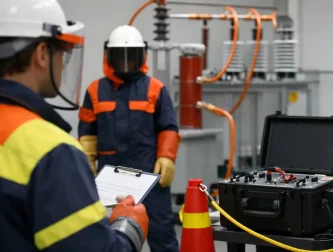
Choose an HV approved training course that builds practical competence

Citroën has unveiled ë-Berlingo, the latest version of its multi-awa
