York
08:00 AM - 05:00 PM
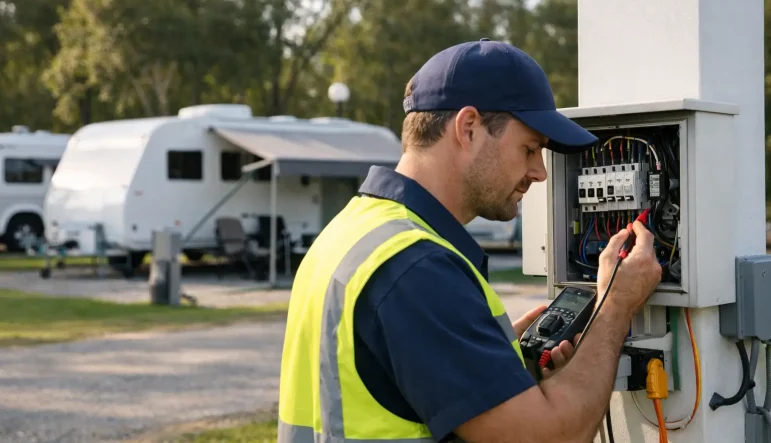
A busy changeover day can expose weaknesses in a caravan park’s electrical system quickly. One damaged hook-up lead, a cracked outlet enclosure or a circuit that trips repeatedly can affect guest safety, bookings and the site’s operating reputation. This guide to caravan park electrical compliance sets out the practical controls park owners, operators and facilities teams should have in place across the UK.
Electrical compliance is not achieved by arranging an inspection once and filing the certificate away. It depends on suitable design, competent installation, planned inspection and testing, clear records, and prompt action when defects are found. The exact requirements will depend on the park’s layout, supply arrangement, facilities and local licensing conditions, but the core duty remains the same: electrical systems must be safe for the people using and maintaining them.
A caravan park is a mixed electrical environment. It may include pitch hook-up points, distribution equipment, toilet and shower blocks, reception areas, laundries, staff accommodation, workshops, lighting, gates, electric vehicle charging and seasonal installations. These assets are exposed to weather, public use, ground movement and high turnover of users.
For fixed electrical installations, BS 7671, the IET Wiring Regulations, is the principal technical benchmark used by competent electrical contractors in the UK. Caravan and camping parks have specific considerations within Section 708, including the supply arrangements for caravan pitches and protective measures at hook-up points. The Electricity at Work Regulations 1989 also place duties on those responsible for systems used at work to ensure they are constructed, maintained and operated safely.
Compliance is therefore broader than the hook-up bollard. A safe pitch outlet supplied by an overloaded or poorly maintained distribution board is not a compliant outcome. Equally, a modern consumer unit does not address a damaged socket, inaccessible isolator or ineffective earthing arrangement at the pitch.
The right starting point is a survey of the whole installation, not a narrow check of visible outlets. An experienced contractor should establish how the site is supplied, where electrical assets are located, what loads are expected, and whether additions have outgrown the original infrastructure.
This assessment should consider supply capacity and diversity. Parks often experience predictable peaks: breakfast and evening cooking, electric heating during colder months, battery charging, laundry use and increasing demand from electric vehicles. A supply that appeared adequate when the park was developed may now be under pressure. Repeated nuisance tripping should never simply be accepted as part of normal operation; it needs investigation.
The survey should also identify the earthing system and confirm that the protective measures selected are appropriate for the installation. Outdoor electrical systems, buried cables and points accessible to the public require particular care. Design decisions must be based on verified site conditions, not assumptions carried over from previous works.
Pitch supply equipment receives constant handling and regular exposure to rain, sunlight, impact and corrosion. Each outlet should be suitably rated for outdoor use, securely mounted, free from damage and capable of being isolated when required. Covers, glands, enclosures and cable entry points all matter because water ingress can undermine an otherwise sound installation.
Caravan pitch outlets normally require appropriate overcurrent protection and 30 mA residual current device protection in accordance with the relevant requirements of BS 7671. The protective devices must be correctly selected, installed and tested. An RCD test button is a useful user check, but it is not a substitute for formal electrical testing that confirms disconnection performance and the integrity of the circuit.
Park operators should also pay attention to the condition of guests’ connection leads. While a guest’s lead is not usually part of the park’s fixed installation, visibly damaged, unsuitable or improvised equipment should not be connected to the site supply. Clear site rules and a practical process for refusing unsafe equipment protect both the guest and the operator.
New circuits, replacement distribution equipment and significant alterations should be designed, installed, inspected and tested by a competent person. The work should be accompanied by the appropriate electrical certification, including test results and schedules that accurately describe what has been installed.
Existing fixed wiring needs periodic inspection and testing at intervals determined by the installation’s use, condition and risk. For many caravan park areas, the outdoor setting and likelihood of deterioration justify a more cautious maintenance approach than a low-use indoor office. A formal Electrical Installation Condition Report, often called an EICR, identifies defects, departures and areas requiring further investigation.
The report is only valuable when its findings are understood and acted upon. Observations coded as dangerous or potentially dangerous require urgent attention. Other findings may be less immediate but should still feed into a planned remedial programme. Retain certificates, reports, test results, circuit schedules and evidence of remedial work in a controlled site record. These documents support safe maintenance, provide continuity when staff change and demonstrate responsible management if questions arise.
A practical inspection regime catches many issues before they become faults. Site staff do not need to carry out electrical repairs, but they should know what to look for and when to escalate concerns. A short documented walk-round before peak season, after severe weather and during routine maintenance can be highly effective.
Items that warrant immediate attention include:
Staff should have a clear isolation and reporting process. If equipment appears unsafe, it should be taken out of service where safe to do so, marked clearly, and referred to a competent electrical contractor. Repeatedly resetting a protective device without identifying the cause can allow a developing fault to remain in service.
Toilet blocks, shower areas, kitchens, laundries and swimming or leisure facilities may introduce additional electrical requirements because of moisture, heat or special locations. Equipment selection, zoning, bonding and protective measures must be assessed against the specific use of the space. These are not areas for generic solutions.
External lighting also deserves scrutiny. Poorly designed lighting can create hazards through damaged columns, shallow cabling or inadequate protection, while excessive lighting can affect the visitor experience and neighbouring properties. The objective is safe, reliable illumination with maintainable equipment and properly documented circuits.
Electric vehicle charging is another common point of change. A domestic socket or an improvised extension lead is not an appropriate long-term charging strategy for guests or staff. Where charging is proposed, the existing supply capacity, load management, earthing arrangement and equipment specification should be assessed before installation. It may be necessary to phase the project or introduce managed charging rather than simply add more outlets.
Electrical compliance can slip when sites evolve in small stages. A new glamping area, additional pitches, refurbished amenity block or upgraded reception may be treated as a standalone job, despite relying on shared upstream infrastructure. Any material change should trigger a review of distribution capacity, protective devices, drawings and test documentation.
Use competent, appropriately qualified electrical contractors who can survey, install, test and explain the result in operational terms. For complex sites, it is particularly useful to work with a contractor able to connect the design decision to the maintenance plan, rather than treating certification as an administrative final step. SJB Smart Electricals supports this approach through electrical surveys, installation and workforce-focused training across demanding environments.
Keep site teams informed when changes are made. Updated circuit identification, accessible isolation information and clear handover records make fault response safer and faster. This is particularly relevant where seasonal staff or external maintenance providers may not know the site layout.
The most reliable parks treat electrical safety as a managed programme. They maintain an asset register, set inspection dates, record defects, allocate remedial actions and review recurring faults. This gives owners and facilities managers a clearer view of spend, risk and future capacity requirements.
There is no single inspection interval or upgrade specification that suits every site. A small seasonal park with a simple supply has different risks from a large holiday destination operating year-round. What matters is that decisions are evidence-led, recorded and reviewed when the site changes.
A well-maintained electrical installation rarely draws attention from guests, and that is precisely the point. Behind a dependable stay should be a system that has been properly assessed, tested, documented and cared for long before a caravan arrives on pitch.

Who needs an electrical survey? Learn when homes, businesses, industri

Citroën has unveiled ë-Berlingo, the latest version of its multi-awa
