York
08:00 AM - 05:00 PM
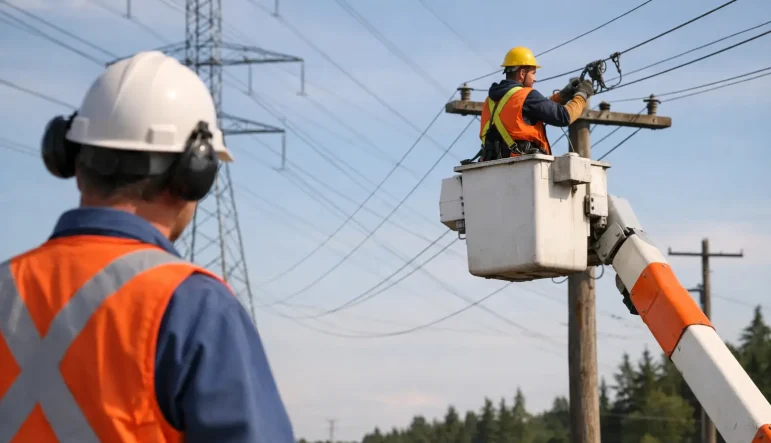
Overhead lines can appear well clear of a job until a lorry body is raised, a scaffold is moved, or a long load is lifted. A GS6 working near powerlines course gives workers, supervisors and planners the knowledge needed to recognise that risk before site activity starts – not after a near miss.
For businesses working in construction, maintenance, agriculture, logistics, rail-adjacent locations or industrial estates, overhead line safety must be part of everyday planning. The consequences of contact or electrical flashover can be severe, even where equipment does not physically touch a line. Effective training supports safer decisions on site, but it must sit alongside a suitable risk assessment, clear controls and competent supervision.
GS6 is the Health and Safety Executive guidance document Avoiding danger from overhead power lines. It is widely used as a practical reference for managing work where plant, vehicles, lifting equipment, materials or people could come close to overhead electrical lines.
The guidance is relevant wherever overhead lines cross, border or run near a work area. That may include a construction compound, warehouse yard, farm access route, highway works area, commercial development or infrastructure project. It applies to more than major crane operations. A tipper lorry, telehandler, excavator, concrete pump, mobile elevated work platform or long conductive item can all introduce a serious hazard.
A course based on GS6 guidance helps participants understand the principles behind the controls. The aim is not simply to remember a set of distances. It is to identify the overhead line, establish what work could create an encroachment risk, and put practical arrangements in place before work begins.
The precise syllabus will depend on the delegate role and the activities undertaken. A supervisor overseeing lifting operations needs a different depth of knowledge from a delivery driver entering a controlled site. However, competent training should address the core operational issues.
Delegates should learn how to identify overhead lines during surveys, site inductions and pre-start planning. This includes recognising that lines may be difficult to see in poor weather, low light or areas with tree cover, and understanding that the apparent height of a line can be misleading.
Training should also reinforce the need to establish ownership and voltage information through the appropriate channels. Assumptions based on the size, appearance or location of a line are not an adequate basis for safe working arrangements.
A key subject is the use of safe clearances and the establishment of exclusion zones. These controls must account for the line voltage, the type of work, the maximum reach or height of plant, and movement of suspended loads or materials.
A marked route or barrier can be effective, but only if it is properly planned and maintained. On a busy site, barriers may be moved, access routes may change and new contractors may arrive. Supervisors need to check that controls remain suitable as the work develops.
Plant movement is one of the most common causes of overhead line incidents. A course should cover planning delivery routes, selecting suitable unloading areas, controlling reversing and ensuring raised bodies, booms and masts cannot enter the danger area.
Lifting operations require particular care. A load can swing, a crane boom can move beyond its intended position, and changing ground levels can affect clearance. The lifting plan, plant selection and appointed personnel arrangements must reflect the presence of overhead lines. Training cannot replace a properly planned lift, but it helps those involved recognise when the plan needs to be reviewed.
Workers must know that contact with, or a suspected flashover from, an overhead line is an emergency. The safest immediate action for an operator is generally to remain in the cab or enclosed operating position, warn others to keep away and contact the emergency services and network operator through the agreed procedure.
People outside must not approach the vehicle, plant or load. The ground around the incident may be live. If escape is unavoidable because of immediate danger, such as fire, the person must avoid simultaneously touching the vehicle and ground, then move away using the approved emergency method taught in their site procedure. This is not an event to improvise around.
GS6 awareness is valuable for anyone whose work may bring them near overhead lines. That includes site managers, supervisors, operatives, plant operators, banksmen, lifting teams, delivery drivers, surveyors and maintenance personnel. It is also relevant to those who plan work remotely, including project managers and facilities teams responsible for contractor coordination.
The level of training should be proportionate to the role. A general awareness session may be suitable for staff who enter a controlled site but do not operate plant. Those directing vehicle movements, planning lifting operations or managing high-risk work need more detailed, role-specific instruction and demonstrable competence.
For property operators and procurement leads, the benefit is clearer communication. When contractors understand the same hazards and controls, it becomes easier to set site rules, assess method statements and challenge arrangements that do not adequately address overhead lines.
There is no single course certificate that makes every task near powerlines safe. Employers and duty holders must still assess the specific work, consult the relevant electricity network operator where required, and apply controls appropriate to the location.
In some cases, the best option is to arrange for the line to be diverted, isolated or otherwise made safe by the network operator. In other situations, work can proceed with clearly defined exclusion zones, goalposts, height restrictions, route management and trained spotters. The right approach depends on the voltage, available space, type of equipment and duration of the work.
This is why generic toolbox talks alone are often insufficient. A briefing may raise awareness, but workers also need to understand how the controls apply to their equipment, their route and the task in front of them. Records of training, inductions, inspections and briefings should support the wider safe system of work.
When selecting a GS6 working near powerlines course, look beyond the course title. The provider should be able to explain who the training is designed for, what practical site scenarios are covered and how learning is assessed. Content should be current, relevant to UK work practices and delivered by people with genuine electrical safety and operational experience.
For organisations with mixed workforces, tailored delivery can be more effective than a standard session. A facilities team managing contractor access has different responsibilities from an industrial maintenance crew or a construction site plant team. Training that reflects the actual work environment is more likely to influence behaviour when pressure builds on site.
SJB Smart Electricals approaches electrical training with the same focus applied to surveys and installation work: practical controls, clear responsibilities and standards that can be applied in real operating conditions. For higher-risk environments, that grounded approach matters.
The strongest outcome from GS6 training is a workforce that pauses before acting. It is the driver who checks the delivery route before raising the body, the supervisor who relocates a loading area, and the planner who identifies an overhead line before equipment reaches site.
Overhead line safety is built through those decisions, repeated consistently. A well-chosen course gives teams a common language for recognising danger and acting early, when there is still time to make the work safe.

Learn what a GS6 working near powerlines course covers, who needs it,

Citroën has unveiled ë-Berlingo, the latest version of its multi-awa
