York
08:00 AM - 05:00 PM

A failed kettle in a staff kitchen may look like a minor facilities issue. A damaged lead, cracked plug or unsuitable extension arrangement can, however, create a genuine risk of electric shock, fire and avoidable disruption. For organisations responsible for workplaces, rental properties, sites or portable equipment fleets, a well-chosen PAT testing course gives staff the knowledge to identify those risks and deal with them properly.
Portable appliance testing is often treated as a simple pass-or-fail exercise. In practice, competent testing involves visual inspection, appropriate use of test instruments, sound judgement and accurate records. The right training helps people understand what they are looking at, why it matters and when an item should be removed from service.
PAT stands for portable appliance testing, but the term covers more than plugging an appliance into a tester and reading a result. A useful course should start with the principle that most faults are found through a careful visual inspection. Damaged cables, loose plug tops, exposed conductors, incorrect fuses, overheating and signs of misuse can often be identified before any electrical test is carried out.
The course should then explain the different classes of equipment and the tests that may apply. This normally includes Class I appliances, which rely on an earth connection; Class II appliances, which are double insulated; and leads, extension reels and adaptors. Delegates should understand why the equipment classification affects the testing approach rather than simply selecting a pre-set option on a machine.
Practical instruction matters. A competent learner needs time using a PAT tester, carrying out visual checks, interpreting results and labelling equipment correctly. They should also learn how to complete an asset register or test record, including the appliance description, location, unique identification, test date, result and next review date.
A sound course also addresses the limits of testing. PAT testing does not prove that every electrical risk has been eliminated, nor does it replace a wider electrical installation inspection. Fixed wiring, distribution boards and permanently connected equipment require different assessment methods. Training should make that distinction clear.
One of the most valuable outcomes of a PAT testing course is a better understanding of electrical safety responsibilities. UK law does not set a universal legal requirement for every portable appliance to be tested annually. The Electricity at Work Regulations 1989 require electrical systems to be maintained so far as is reasonably practicable to prevent danger. The appropriate inspection and testing interval depends on risk.
A low-use, double-insulated office monitor in a controlled environment does not carry the same risk as a power tool used daily on a construction or industrial site. Likewise, equipment used by the public, moved frequently between locations or exposed to moisture, dust and mechanical damage may need more frequent attention.
This is why a course that only teaches a fixed annual testing routine is of limited value. Good training should help delegates consider equipment type, environment, user behaviour, frequency of use and the likelihood of damage. That supports a proportionate maintenance regime rather than unnecessary testing or, more seriously, missed hazards.
For landlords and property managers, this distinction is equally relevant. Portable appliances supplied as part of a tenancy should be safe, but the approach should be based on the condition and risk presented by the equipment. Clear records and sensible inspection arrangements are more useful than relying on labels alone.
Training is suitable for people who have responsibility for portable electrical equipment but do not necessarily work as electricians. Facilities teams, caretakers, maintenance staff, landlords, small business owners and site supervisors often benefit from being able to carry out routine checks competently.
In commercial premises, internal testing capability can make sense where there is a large volume of equipment, frequent relocation of workstations or several sites to manage. It can reduce delays when equipment needs checking and give facilities teams greater visibility over the condition of their assets.
For industrial and transport-related environments, the decision needs more care. The equipment may be more varied, the site conditions harsher and the consequences of an electrical fault greater. Training can support day-to-day controls, but complex sites may still require a competent electrical contractor for higher-risk equipment, remedial work, fixed installation inspections or independent verification.
Homeowners may also find basic awareness training useful, particularly where they manage a home office, workshop or rental property. However, no course should encourage anyone to undertake electrical repairs beyond their competence. Identifying a defect and taking an item out of use is often the correct immediate action.
The best course is not necessarily the longest or the cheapest. It should match the equipment, working environment and level of responsibility held by the people attending. Before booking, consider whether delegates need awareness of electrical safety, practical testing skills or a more formal route that includes assessment and certification.
Look for training that balances classroom explanation with supervised practical work. Delegates should handle typical items such as kettles, computers, extension leads and portable tools, but the training should also cover the types of appliances used in their own setting where possible. A facilities manager responsible for office equipment has different needs from a maintenance operative working around industrial tools and temporary power supplies.
The quality of the trainer is important. Electrical safety training should be delivered by someone with genuine technical knowledge and current experience of inspection, testing and safe working practices. They should be able to explain the reasoning behind a test result, not merely demonstrate a sequence of buttons.
It is also worth checking what the course certificate represents. A certificate usually confirms attendance or successful completion of an assessment. It does not automatically make someone competent for every electrical task or remove an employer’s responsibility to provide suitable procedures, equipment, supervision and ongoing support.
Ask whether practical assessment is included, whether learners will use recognised test equipment and whether the course covers visual inspection, appliance classes, leads and extensions, record keeping and risk-based retest intervals. For organisations with particular compliance requirements, ask how the training relates to their equipment register, site procedures and reporting process.
If the course is delivered remotely, confirm how practical competence will be assessed. Online learning can be useful for theory and refresher knowledge, but it is not always sufficient for someone expected to use a tester independently for the first time.
A PAT testing course is most effective when it sits within a clear workplace process. After training, staff should know who is responsible for testing, what equipment is in scope, how items are identified and what happens when a fault is found. Without this structure, records become inconsistent and failed equipment can remain in circulation.
Begin with an equipment register. It does not need to be complicated, but it should provide a reliable picture of portable appliances, their locations and their inspection history. Equipment brought onto site by staff or contractors should also be considered, particularly in shared offices, workshops and project environments.
Set inspection and test frequencies according to risk, then review them when conditions change. A move to hot-desking, a workshop expansion, a refurbishment programme or repeated damage to particular items may all justify changes to the regime. Record the reason for the chosen interval so that decisions can be explained and reviewed.
When equipment fails, remove it from service promptly and clearly. It should be repaired by a competent person, replaced or disposed of. A failed label is not the end of the process; it is the point at which an organisation demonstrates that its electrical safety controls work in practice.
SJB Smart Electricals approaches training with the same practical focus applied to electrical surveys and installation work: the aim is not simply to issue a certificate, but to help teams make safer, informed decisions on site.
A properly selected course gives people the confidence to spot defects early, test equipment appropriately and keep meaningful records. That confidence should always be paired with good judgement: when the equipment, environment or fault falls outside the learner’s competence, the safest decision is to stop, isolate the item and seek qualified electrical support.
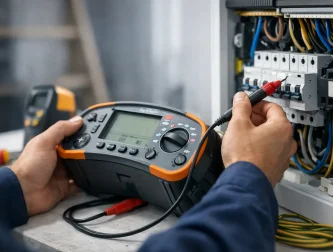
Exploring multifunction testers gives teams reliable evidence on elect

Citroën has unveiled ë-Berlingo, the latest version of its multi-awa
