York
08:00 AM - 05:00 PM

A homeowner calling for an extra socket and a facilities manager planning power distribution for a multi-unit site may both need an electrician, but the work is not remotely the same. That is the real issue in commercial vs domestic electrical services. The standards, design demands, risk profile and working environment all shift depending on the building, its use and the consequences of failure.
For clients comparing providers, this matters because the wrong fit can create delays, compliance issues and avoidable cost. An electrical contractor working in homes needs sound technical knowledge and safe installation practice. A contractor working in commercial settings needs that too, but also stronger coordination, broader system awareness and a clear grasp of operational risk.
At a basic level, domestic electrical services relate to homes, flats and residential buildings where the electrical system supports day-to-day living. That usually includes lighting, socket circuits, consumer units, fault finding, testing, rewires, electric heating connections, cooker supplies and EV charger installation.
Commercial electrical services apply to premises used for business or public activity. Offices, schools, retail units, hospitality venues, warehouses, healthcare settings and multi-occupancy properties all sit in this category. The work often involves larger distribution systems, emergency lighting, fire alarm interfaces, three-phase supplies, maintenance planning, inspections, data coordination and compliance records.
The difference is not simply that commercial sites are bigger. Some domestic projects are extensive, and some commercial jobs are quite contained. The real distinction is that commercial environments tend to have more complex loads, more users, tighter legal duties and greater operational consequences if the electrical system is poorly designed or interrupted.
Domestic systems are generally built around predictable household demand. Even in larger homes, usage patterns are relatively familiar. Lighting, cooking, heating, appliances and electronics all need to be accommodated, but the infrastructure is usually straightforward enough to diagnose and adapt without major disruption.
Commercial systems are more varied. An office may need power for workstations, server equipment, air conditioning, security systems and communal lighting. A restaurant has very different demands, with catering equipment, extraction, refrigeration and customer-facing areas all affecting load calculations and circuit design. In industrial-linked or transport-adjacent settings, requirements become more specialised again.
This affects how the work is approached. In a domestic setting, an electrician may be able to isolate part of the installation with limited impact. In a commercial building, even a short outage can stop trading, interrupt staff activity or affect safety systems. That means planning, sequencing and communication become more critical.
There is also a sharper need for future capacity in commercial work. A business may expand, reconfigure floor space or introduce new equipment. Electrical design in those settings often has to account for change, not just current demand.
One of the clearest technical differences is supply type. Most homes run on single-phase supplies, which are suitable for standard residential use. Commercial premises may use single-phase or three-phase, depending on the building and equipment.
Three-phase power allows larger and more balanced loads, which is often essential in business environments. Once that enters the picture, distribution planning becomes more involved. Boards, sub-mains, containment and protective devices all need to be selected and installed with the wider system in mind.
That does not mean every commercial site is highly complex. A small shop may be simpler than a high-end domestic renovation. But as a rule, commercial installations demand more coordination between electrical design, building use and compliance requirements.
Both domestic and commercial electrical work in the UK must be safe and carried out to the relevant standards. The key point is that commercial duty holders often face broader compliance responsibilities because they are responsible for staff, tenants, visitors or members of the public.
In a domestic setting, the emphasis is typically on safe installation, certification, inspection and meeting Part P requirements where applicable. For the homeowner, the immediate concern is usually safety, reliability and confidence that the work has been signed off correctly.
In commercial settings, the conversation extends further. Landlords, employers and facilities teams may need periodic inspection and testing, emergency lighting checks, maintenance records and evidence that electrical systems are being managed properly. The legal and insurance implications can be significant if they are not.
This is one reason approved and authorised contractors matter. It is not just about technical ability on the tools. It is about having a provider who understands documentation, inspection standards, safe systems of work and the practical realities of regulated environments.
Domestic work is usually arranged around the household. The priorities are clear communication, tidy working, reliable attendance and keeping inconvenience manageable. There may be children in the property, occupied rooms and limited time windows, but the site itself is generally controlled and familiar.
Commercial work often brings another layer of complexity. Access may depend on permits, induction procedures, security clearance, tenant coordination or out-of-hours scheduling. In some buildings, noisy work can only happen at certain times. In others, power isolation has to be agreed in advance because critical services depend on continuity.
That changes labour planning and project delivery. The technical task may only take a day, but the preparation behind it can take much longer. For clients, that means the cheapest quote is not always the most economical option if it fails to account for real site conditions.
Surveys are valuable in any environment, but they become especially important in commercial projects because hidden issues tend to have wider consequences. Existing installations may have been altered over time, records may be incomplete and live operations may limit access.
A proper survey helps establish condition, capacity, constraints and likely compliance gaps before installation begins. That reduces the chance of discovering major issues halfway through the job. It also gives property managers and procurement leads a firmer basis for budgeting and programme decisions.
For mixed-use estates or infrastructure-linked premises, survey quality is often what separates a controlled project from a reactive one.
Most domestic customers call an electrician when something changes, fails or needs upgrading. There may be periodic testing, but maintenance is usually less formal unless the property is rented or part of a managed portfolio.
Commercial sites tend to need a more structured approach. Even where there is no fault, electrical systems may require planned inspection, testing and remedial work to maintain safe operation. This is particularly true where buildings are heavily used, open to the public or dependent on uninterrupted power.
A domestic client might reasonably focus on whether the lights work and the installation is safe. A commercial client also has to ask whether the system supports business continuity, occupancy requirements and future works. That is why commercial electrical services often sit within a wider maintenance and compliance strategy rather than as one-off callouts.
The phrase commercial vs domestic electrical services can suggest two entirely separate trades, but there is overlap. The strongest contractors understand core electrical principles across sectors. The difference lies in whether they can apply those principles appropriately in the environment you operate in.
If you are a homeowner, you need clear advice, compliant installation and a contractor who respects the property and communicates plainly. If you manage a commercial site, you need a provider who can handle surveys, installation planning, certification and operational constraints without creating unnecessary risk.
That becomes even more important on projects that sit between categories, such as blocks of flats, managed residential developments, mixed-use sites or transport-related facilities. These jobs often combine domestic-style spaces with commercial responsibilities. A contractor with broader sector experience is usually better placed to identify where those boundaries matter.
SJB Smart Electricals operates in that wider space, supporting clients who need assessment, installation and capability-led service rather than a narrow one-trade approach.
Clients often compare domestic and commercial work through price, but that can be misleading. Commercial projects usually cost more because they involve larger systems, more planning, stricter access control and more extensive documentation. Even where the physical installation seems modest, the compliance and coordination burden can be substantial.
Domestic work can also become expensive when the existing installation is in poor condition or the property is being significantly altered. Rewires, consumer unit upgrades and fault tracing in older homes can all be labour-intensive.
The sensible question is not which type of service is cheaper. It is whether the scope, risk and site conditions have been understood properly from the outset. A well-scoped job is usually better value than a low initial figure followed by variations, delays and remedial works.
When you are deciding what sort of electrical support you need, start with the building use, the level of risk and the consequences of failure. That will usually tell you more than the label on the quote, and it will help you choose a contractor who is equipped for the work ahead.
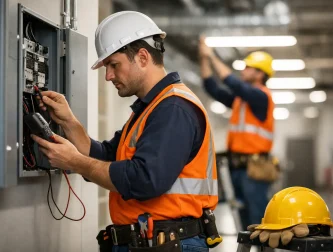
Commercial electrician services for compliant, efficient premises, fro

Citroën has unveiled ë-Berlingo, the latest version of its multi-awa
