York
08:00 AM - 05:00 PM
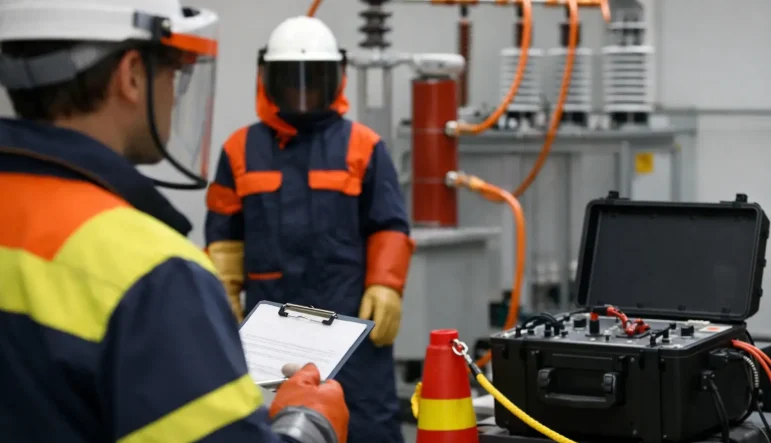
High-voltage work does not become safe because a technician has attended a classroom session. Safety depends on their ability to understand the network, follow the site’s safety rules, apply the correct controls and stop when conditions are unclear. An HV approved training course should support that level of competence, giving employers a sound basis for appointing and authorising people to work on or near high-voltage systems.
For facilities managers, contractors and duty holders, the question is not simply whether a course certificate can be produced. The real test is whether the training is relevant to the equipment, operating procedures and responsibilities on site. That distinction matters in commercial buildings, industrial facilities, rail environments and other locations where an error can have life-changing consequences.
The term “approved” is used widely, so it should be checked carefully. It can refer to a training provider’s recognised quality processes, an externally accredited course, or an employer’s approval of an individual to carry out a defined role. These are not interchangeable.
A course can be delivered by an experienced provider and still not, by itself, authorise someone to operate a particular client’s HV network. Formal authorisation is normally granted by the employer or duty holder after assessing the individual’s experience, training, knowledge of the local system and understanding of site safety rules.
This is particularly relevant where sites operate their own high-voltage distribution network, substations, switchgear or private cables. The person appointed as an Authorised Person must understand not only general HV principles but also the exact arrangements used at that location: isolation points, points of supply, earthing locations, lock-off methods, permit procedures and emergency contacts.
Training therefore provides a crucial foundation. Employer authorisation confirms that the individual is suitable for a specific duty within a specific system.
A technician may be highly capable on low-voltage installations yet have limited exposure to HV switching, earthing or safety documentation. High-voltage systems introduce different hazards and a greater need for disciplined control. Induced voltages, stored energy, backfeeds, remote operation and incorrect identification of equipment can all turn a routine task into a serious incident.
Competence also depends on the role. A Senior Authorised Person may need the knowledge and judgement to plan outages, issue safety documents, manage complex isolations and supervise Authorised Persons. An Authorised Person may be responsible for defined switching operations and permits. A Competent Person may work under a permit or limitation of access but not control the system independently.
The right course should reflect those responsibilities. Sending every member of a maintenance team on the same course may appear efficient, but it can create false confidence if the content does not match the duties they will actually perform.
Most well-managed HV installations operate under Electrical Safety Rules. These establish who may carry out switching, how isolations are achieved, how safety documents are issued, and what checks are needed before work begins. They also set clear boundaries between operational control and physical work.
Training should give delegates a working understanding of safety-rule principles, including the purpose of permits-to-work, sanctions-for-test, limitations of access and caution notices where applicable. However, delegates must then be briefed and assessed against the local rules that govern their own site.
A generic course alone cannot explain the layout of a particular substation or identify every possible source of supply. Local familiarisation is not an administrative extra. It is the step that connects training to safe operational practice.
Course content will vary according to the delegate’s role and existing experience, but a credible programme should combine technical knowledge with operational decision-making. It should not rely on slides and multiple-choice questions alone.
The strongest courses generally address the nature of high-voltage hazards, safe approach distances, system control, switching principles, isolation and earthing, electrical safety documentation, emergency procedures and the responsibilities attached to each role. Delegates should also understand the limits of their authority. Knowing when not to proceed is as valuable as knowing how to complete a planned operation.
Practical elements are especially valuable. Where suitable facilities and equipment are available, delegates should practise interpreting single-line diagrams, preparing switching sequences, identifying equipment correctly, applying locks and caution notices, and following the sequence needed to make equipment safe for work. This exposes misunderstandings before they are carried onto an operational site.
Assessment should test judgement as well as recall. A person who can define an isolation is not necessarily able to recognise an incomplete isolation on a complex network. Discussion of realistic scenarios, written assessment and observed practical exercises create a more reliable picture of capability.
Before selecting a provider, employers should be clear about the outcome required. Is the objective to give new staff an awareness of HV hazards, prepare experienced personnel for an Authorised Person role, or support a formal employer authorisation process? Each need requires a different level of training and assessment.
It is sensible to ask how the course is tailored to the sector and equipment involved. A distribution network, a manufacturing plant, an airport estate and a commercial property portfolio may all use HV infrastructure, yet their operational risks and procedures can differ considerably. Training should acknowledge these differences rather than treating every installation as identical.
The provider’s practical experience also matters. Trainers should understand how safety rules are applied during real maintenance, fault response, planned shutdowns and handovers between contractors. Theory is necessary, but delegates gain greater value when it is connected to the decisions they will make under site pressure.
Employers should also confirm what evidence is issued after completion. A certificate can record attendance and successful assessment, but it should state the scope of the course accurately. It should not imply an individual has been appointed to a role that only their employer can authorise.
An HV training course should sit within a wider competence-management process. Before authorising someone, the duty holder should consider their qualifications, practical experience, prior training, understanding of local safety rules and ability to communicate clearly with colleagues and contractors.
For higher-risk roles, an interview or formal assessment against the site’s Electrical Safety Rules may be appropriate. The authorisation should define the person’s limits clearly, such as the voltage range, equipment type, location or duties they may undertake. Broad wording can leave too much room for assumption.
Competence must also be maintained. Changes to the network, switchgear replacement, new protection arrangements, revised safety rules or long gaps in HV duties can all affect a person’s suitability to remain authorised. Refresher training and periodic reassessment should be planned around risk, role complexity and site changes rather than treated as a paperwork exercise.
Records need to be available and current. In the event of an incident, audit or client review, organisations should be able to show who was trained, what they were assessed on, what their authorisation covers and when it is due for review. Clear records also help facilities teams manage contractor access and ensure that only suitably appointed people take control of HV operations.
For a homeowner or small business owner, HV training may not be directly relevant, but choosing a contractor with appropriate high-voltage competence can be critical where supplies, substations or specialist infrastructure are involved. They should expect clear boundaries around who controls the system and how work will be made safe.
For industrial operators and infrastructure organisations, the requirement is usually more detailed. Training may need to align with operational continuity plans, asset-management procedures, client safety rules and multi-contractor working arrangements. Outage windows can be limited, so poorly planned switching or unclear roles can affect both safety and service delivery.
SJB Smart Electricals approaches electrical training with the same practical focus required for surveys and installation work: the training must support safe action in the field. A well-chosen course helps build capability, but the strongest results come when it is followed by local assessment, clear authorisation and consistent supervision.
When considering an HV approved training course, look beyond the certificate. Choose training that reflects the work, the equipment and the level of responsibility, then give trained people the local knowledge and authority they need to make safe decisions when it matters.

Learn how non-electrically experienced maintenance teams can be traine

Citroën has unveiled ë-Berlingo, the latest version of its multi-awa
