York
08:00 AM - 05:00 PM
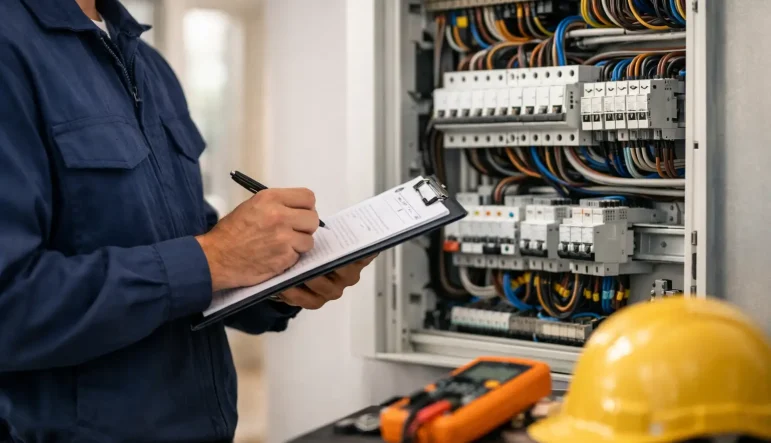
If you are planning electrical work on a home, workplace or industrial site, one of the first compliance questions is when is electrical installation certification required. The short answer is that certification is usually required whenever new electrical work is installed, altered or added in a way that needs inspection, testing and formal confirmation that it meets the relevant standard.
That answer sounds simple, but in practice it depends on the type of premises, the scale of the work and whether the job falls under building control notification rules. For homeowners, landlords, facilities teams and procurement leads, the key point is this: if electrical work is more than a like-for-like replacement, there is a strong chance certification will be needed.
In the UK, certification is generally required when electrical installation work must be inspected and tested against BS 7671, the IET Wiring Regulations. This applies to a wide range of jobs, including new circuits, consumer unit replacements and additions or alterations to existing circuits where proper verification is necessary.
The certificate is not just paperwork for the file. It is the formal record that the installation has been designed, installed and tested to the required standard. On domestic, commercial and industrial projects alike, that record matters for safety, maintenance, insurance, future alterations and demonstrating that work has been carried out competently.
As a rule, certification is expected where work could affect the safety or performance of the installation. Minor jobs may only require a different form of certification, while larger works need a fuller certificate. The detail matters.
In most cases, the relevant document will be either an Electrical Installation Certificate, often called an EIC, or a Minor Electrical Installation Works Certificate, often called a Minor Works Certificate.
An EIC is usually required for new installations, new circuits and significant alterations. If a distribution board is added in a commercial premises, if a new supply is run to plant equipment, or if a consumer unit is replaced in a house, an EIC will normally be the correct certification route.
A Minor Works Certificate is typically used for small additions or alterations to an existing circuit, provided no new circuit is created and the work does not include a consumer unit change. Examples might include adding a socket spur, moving a lighting point or installing an extra fused connection unit on an existing compliant circuit.
There is also the Electrical Installation Condition Report, or EICR, but this is different. It is used for inspection of an existing installation, not to certify new installation work.
For homeowners, one area that often causes confusion is Part P of the Building Regulations in England and Wales. Part P covers electrical safety in dwellings. Some domestic electrical work is notifiable, which means building control must be informed unless the work is carried out by an electrician registered with a competent person scheme who can self-certify.
Notifiable work generally includes the installation of a new circuit and consumer unit replacement. Other work may also be notifiable depending on the location and nature of the installation. The rules have changed over time, so assumptions based on old guidance can cause problems.
This is where people often mix up two separate requirements. One is the electrical certificate under BS 7671. The other is building regulations compliance notification where applicable. Many jobs require both. So if a new circuit is installed in a house, the client should usually expect an EIC and, where the work is notifiable, confirmation that building regulations requirements have also been met.
For straightforward replacements such as swapping a damaged socket or changing a light fitting like-for-like, full installation certification is not usually required. Even then, the work still needs to be safe and carried out correctly.
In commercial and industrial environments, certification is even more clearly tied to duty of care, site safety and operational accountability. If electrical contractors install new circuits, alter distribution arrangements, connect machinery, fit containment with new cabling systems or modify control equipment, certification is typically required.
These settings often involve three-phase systems, higher loads, specialist equipment and more complex fault protection arrangements. That increases the importance of proper design verification and test results. A certificate provides traceability. If there is later a fault, inspection, insurance query or audit, the business has a formal record of what was done and how compliance was established at the time.
For facilities managers and business owners, this is not simply a technical issue. It affects maintenance planning, handover quality and legal defensibility. If work has been completed without the right certification, it can create uncertainty around the condition of the installation and whether it was ever properly tested.
The clearest examples include installing a new circuit, replacing a consumer unit, carrying out a full or partial rewire, adding a new distribution board, installing a supply for fixed equipment, altering circuits in a way that changes protective measures, and completing major fit-out or refurbishment works.
In sector-specific environments such as transport infrastructure, workshops, warehouses and plant rooms, certification is also commonly required when electrical systems interface with operational equipment, emergency systems or critical services. In these cases, accurate documentation is part of competent delivery, not an optional extra.
Where the work includes inspection and testing under BS 7671, certification should normally follow. If no meaningful testing or verification has been done, that is a warning sign.
There are jobs where certification is still required, but the correct form is a Minor Works Certificate rather than a full EIC. This usually applies to limited alterations to an existing circuit that do not extend to a new circuit or consumer unit replacement.
That distinction matters because some clients hear “certificate” and assume every electrical job needs the same document. It does not. The type of certificate should match the scope of work.
There is a trade-off here. Small works can seem low risk, but they still need proper checks. If an extra socket is added to an overloaded ring circuit, or a lighting alteration affects earthing continuity, even a modest change can introduce hazards. Minor works are only minor if the existing circuit is suitable to be altered safely.
Electrical installation certification should be issued by the contractor or qualified person responsible for the design, construction and inspection and testing of the work, depending on the project structure. In many standard jobs, one approved contractor covers all of those roles. On larger projects, responsibilities may be split.
What matters is competence. The person signing the certificate must be able to verify that the work complies with the applicable standard. For clients, this is one reason to appoint an authorised and properly approved contractor rather than treating certification as an afterthought.
A certificate produced without proper inspection and testing has limited value. Good contractors do not treat the documentation as admin at the end of the job. It is part of the job.
Missing certification can cause immediate and long-term issues. A homeowner may run into delays during a sale. A landlord may struggle to demonstrate that work was carried out correctly. A business may face questions from insurers, auditors or maintenance teams. On industrial and infrastructure sites, undocumented electrical changes can create serious operational risk.
There is also the practical problem of future works. If another contractor attends site and finds altered circuits with no certification, they may need to spend additional time investigating before they can safely proceed. That adds cost and uncertainty.
Where certification should have been issued and was not, the right next step depends on the circumstances. Sometimes duplicate copies can be obtained. In other cases, an inspection of the existing work may be needed, but this is not always a perfect substitute because it cannot recreate every stage of the original verification process.
The safest approach is to confirm certification requirements before work begins, not after completion. That means checking the scope, establishing whether the work is a new installation, alteration or minor addition, and clarifying whether building regulations notification applies.
For domestic clients, this avoids confusion over Part P. For commercial and industrial clients, it improves handover standards and protects the integrity of asset records. For both, it sets a clear expectation that the work will be tested, documented and signed off correctly.
At SJB Smart Electricals, this is treated as part of competent service delivery across domestic, commercial, industrial and infrastructure-facing environments. The installation is only one part of the job. The verification and certification behind it are what confirm that the work stands up to scrutiny.
If you are unsure whether a particular project needs an Electrical Installation Certificate or a Minor Works Certificate, the sensible move is to ask before the first cable is run. It is far easier to build compliance into the work from the outset than to try to prove it afterwards.

Smart monitoring in industrial electrics helps sites reduce downtime,

Citroën has unveiled ë-Berlingo, the latest version of its multi-awa
